
Story by Larry Pynn
Suzie Hall heard the killer whales before she saw them. Listening through headphones from OrcaLab, an independent research station on Hanson Island in southern British Columbia, Hall could pick out the cetaceans’ distinctive calls coming through the underwater hydrophone placed near the well-known killer whale rubbing beach at nearby Robson Bight. But her attention was drawn away by the beach’s other recent arrival.
Earlier that day, in August 2021, one of OrcaLab’s remotely operated cameras had spotted a wildlife documentary crew assembling their gear near Robson Bight. “We’d seen them arrive, so we knew to monitor them,” recalls Hall, OrcaLab’s operations manager.
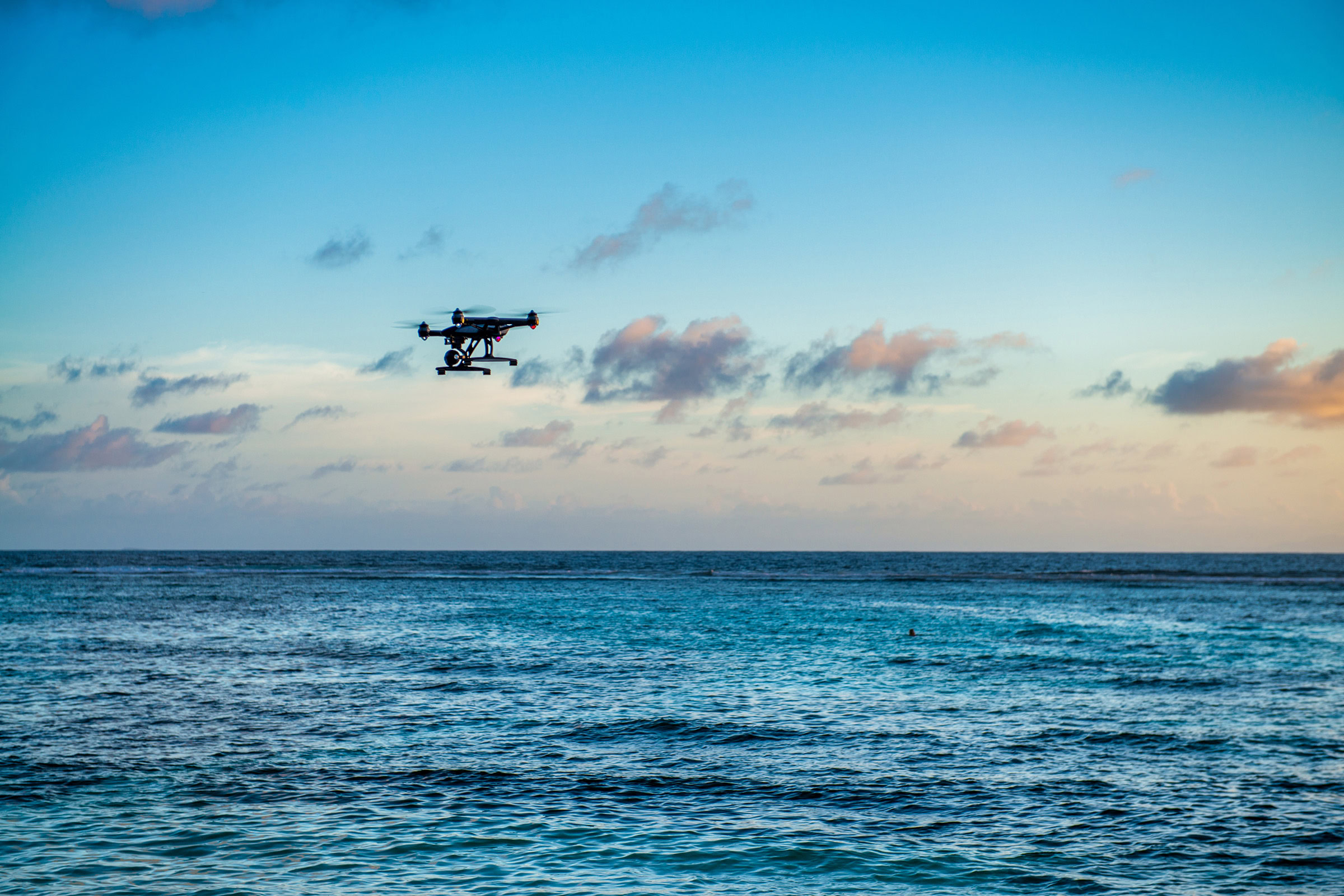
Yet Hall’s curiosity quickly turned to dismay as she watched one of the crew fly a small drone so close to the northern resident killer whales’ heads that she could see the wind its propellers kicked up rippling the water below. “We were in disbelief,” says Hall, aware that Canadian law specifically prohibits this type of harassment.
“You have a degree of faith in people that they’ll be respectful,” says Hall. But it was such a “brazen breaking of the law. There was no way we couldn’t report it.”
Three years later, the OrcaLab video showing the low-flying drone hovering roughly a meter above the killer whales served as a smoking gun in a Provincial Court of British Columbia case. In July 2024, River Roads Films pleaded guilty to disobeying a federal regulation that protects killer whales and other marine mammals. The law prohibits aircraft flying at an altitude below 304 meters (1,000 feet) and within a radius of 926 meters (roughly 3,000 feet) from performing a flight maneuver intended to bring the aircraft closer to a marine mammal or to otherwise disturb it.
During sentencing, federal Crown counsel Jenny Rutherford said River Road Films stood to “profit enormously” from the video. She also said there has been an increase in the use of drones to observe wildlife, and that there is “tremendous public interest” in ensuring wild animals are not disturbed by such activities. The company did provide training to employees regarding the appropriate use of drones, the court heard. “Unfortunately, it appears that at least two individuals at this time chose not to follow their training,” Rutherford said.
Remotely-operated camera footage shows a drone, operated on behalf of River Roads Films, flying illegally close to a northern resident killer whale in Robson Bight, British Columbia. Video courtesy of OrcaLab
Three federal scientists who coauthored a statement in the legal case, meanwhile, wrote that the drone likely “disturbed or disrupted” the cetaceans and put them at increased risk of injury in the event of a drone strike. Over time, the statement says, such incidents could impact the killer whales’ “normal life processes” and cause long-term population harm.
To make matters worse, River Road Films had previously been denied a permit by Fisheries and Oceans Canada to film the killer whales, which are listed as threatened under Canada’s federal Species at Risk Act. As a result of the drone filming—which lasted about three minutes—River Road Films was fined US $17,000. One of the drone operators, Matthew Hood, also pleaded guilty and received a $3,600 fine. The court issued a warrant for a second operator, Kai Meyer, who has been out of the country.
River Road Films, owned by Jeff Turner and Sue Turner, is a successful Canadian documentary film company that has produced more than 40 titles with partners including the BBC, the Discovery Channel, National Geographic, CBC, and others. The company was filming the fraught killer whales drone footage for its 2022 Netflix series Island of the Sea Wolves, which won four Daytime Emmy Awards. The footage from the illegally obtained video was not included in the documentary, but the company used underwater video of the killer whales collected at the same beach.
While both Netflix and Jeff Turner have declined to comment, the case is generating plenty of discussion within the wider wildlife filmmaking and photography community.
Melissa Groo, an award-winning nature photographer from New York, for instance, says wildlife photographers struggle to balance getting a great shot with avoiding putting animals at risk.
“If we’re out there and we’re really trying to get something that is going to be super educational and is really going to contribute to greater appreciation, and possibly to conservation, is it okay to bend ethical rules somehow, sometimes?” she asks.
“I’m not perfect,” says Groo, who helped develop the National Audubon Society’s guide to ethical bird photography and videography. “I’m always having to watch myself.”
Big-budget documentaries, adds Groo, often come with the added pressure to obtain new and rare images.
Alberta-based nature photographer John E. Marriott, who is an associate fellow with the International League of Conservation Photographers (ILCP), says River Roads Films’ legal case “puts a focus on the ethics of the industry.”
The world is awash in wildlife images, and even highly elusive species such as clouded leopards, cougars, and wolverines have been professionally filmed over the years. Amid such an embarrassment of riches, Marriott says, “the ends do not justify the means.” Adding: “Do we have to really break any kind of boundaries to get extra footage?”
While there are government regulations in place in Canada and many other countries to protect marine mammals such as killer whales, the same rarely applies to terrestrial wildlife outside of protected areas. “Generally, it’s lawless,” Marriott says. “There’s no oversight most of the time.”
In October 2024, Marriott won a prestigious wildlife photography award from the Natural History Museum in London, England, for his portrait of a family of three lynx crouched in the snow in the Yukon. Marriott tracked the animals for days by snowshoe to get the shot.
Under ILCP’s ethical guidelines, wildlife photographers should work to minimize “any negative physical, emotional, or behavioral impacts” on nature. Marriott says he does not bait wildlife or use animal calls. He says he also generally limits the amount of time he spends photographing any one animal to 30 minutes, and he does not own a drone for fear of being tempted to get too close to animals. Other guidelines, such as Audubon’s, encourage photographers to use telephoto lenses and blinds, and discourage the use of flashes.
Some filmmakers, such as Sam Rose Phillips, based in Ucluelet, British Columbia, impose even more stringent rules on themselves. Phillips is currently producing a documentary about wolves for the National Film Board of Canada that she is filming exclusively with remote trail cameras. Phillips says she works with local experts to place cameras along known wolf travel routes, while avoiding sensitive sites such as dens. “It’s slower,” she says, but “it’s all about noninvasive filmmaking.” Parks Canada warns that even film crews that maintain a distance can risk habituating their subjects.
Given the industry’s largely unregulated nature, Hall from OrcaLab says the public plays an important role as a watchdog against wildlife harassment. If people see something in a photograph or video that makes them uncomfortable or may breach industry ethics, she says, it’s worth contacting the photographer or filmmaker directly to learn how the images were obtained, and to express those same concerns to broadcasters and publishers.
Nature photographers and filmmakers may be well-meaning, says Hall, but they can also be motivated by their careers. Taking care of wildlife can become “a secondary consideration for the sake of getting the shot.”
The fine and publicity associated with River Road Films’ breach is a reminder that, sometimes, there are consequences for crossing that line.
Related Articles
How Much Plastic Does it Take to Kill a Seabird?
For the first time, researchers uncover how eating plastic trash may impact seabirds at the population level.

Shrimp Shell Slurry to the Rescue?
A new, multistep chemical process can turn bits of organic waste into “carbon-negative” fuel, food, and construction material.
The Lonely Race to Save Ukraine’s Past
In a country ravaged by war, Ukraine’s conservators are torn between protecting the country’s past and fighting for its future.
