
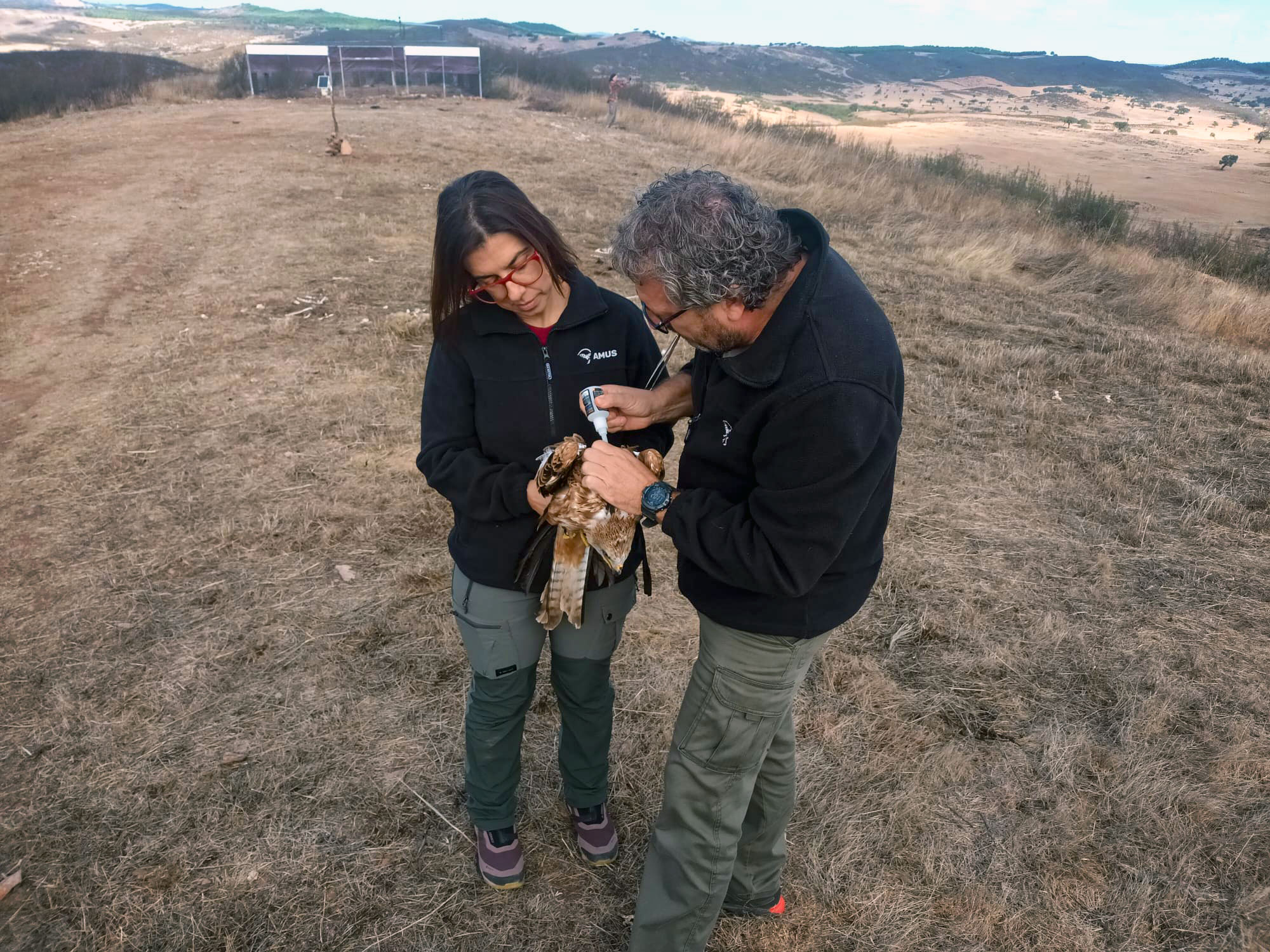
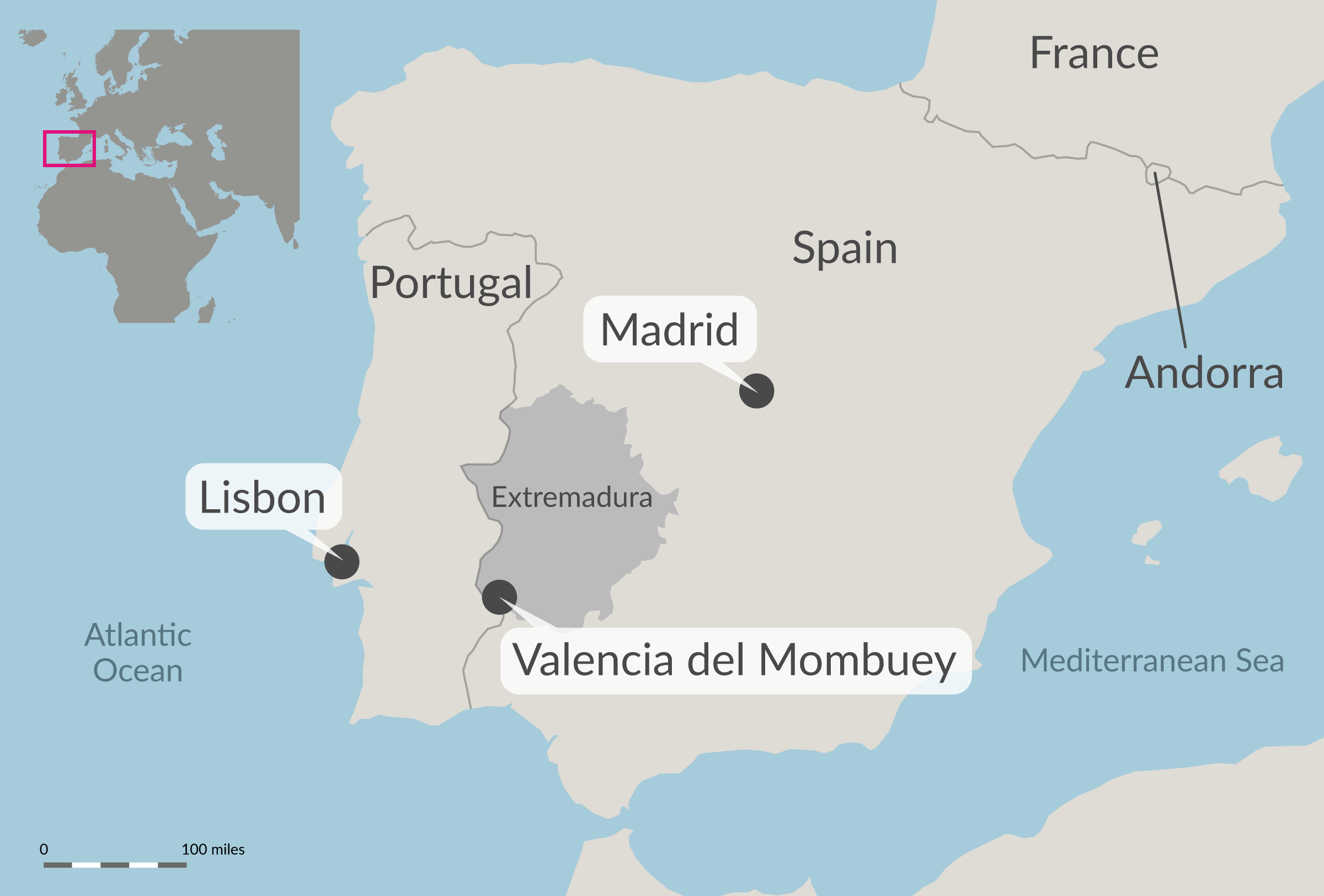
On a fine October morning in the hills of Spain’s Extremadura region, Sofia Marrero carries a wild bird across a field of bones. Gripped tightly in Marrero’s right hand, tail feathers askew, mouth agape like a bewildered hostage, the red kite stares wide-eyed at the journalists waiting on the other side of a raptor feeding station enclosed by chain-link fencing. Soon, this bird—designated U25—will be released with great ceremony by a local news anchor in the hope that she’ll breed with the rest of her kind already soaring above. But first, U25 must visit Marrero’s colleague, Alfonso Godino, a gray-haired, barrel-chested man in his mid-50s standing nearby with crimping pliers, glue, and a GPS tag. The young raptor has been repeatedly weighed, tested for obscure diseases, and held in an aviary for the past four months before being moved to live in another cage atop this feeding station for red kites and vultures. Now she must also be tracked and monitored as she acclimates to a new landscape. Here, U25 will glide over cork trees and scrub—so alien from the oak forests of England where she spent her youth.
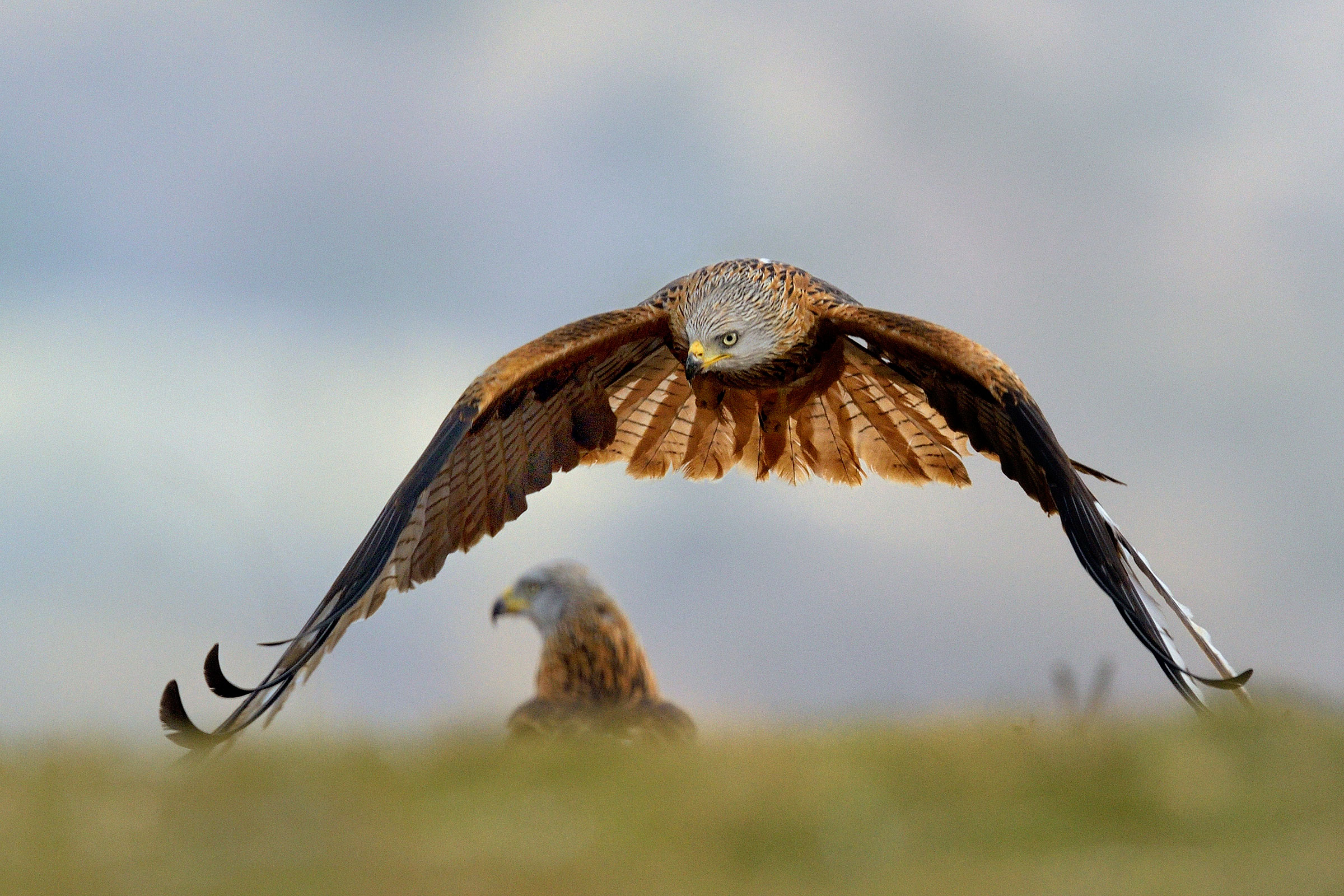
For the most part, spotting a red kite (Milvus milvus) is fairly easy across parts of Western Europe. Boasting a wingspan that can reach 2 meters (6.5 feet) and a striking forked tail, this generalist predator and scavenger has a recognizable silhouette as it surfs and circles along thousands of invisible eddies in the sky before swooping earthward to snatch rabbits, voles, and earthworms—or rotting flesh—with its talons. In Sweden, Germany, France, and Southern Italy, red kite populations are stable. In Spain, however, they’ve been faltering. Beginning in the 1970s, farmers and gamekeepers shot or poisoned red kites—legally and illegally—because they considered them pests. That, combined with habitat degradation, led to a steep population decline by the end of the century.
Now, indigenous red kites are almost completely absent from the skies of regions like Extremadura—a situation that Godino and his colleagues at the conservation nonprofit Acción por el Mundo Salvaje (AMUS) hope to change by infusing the population with birds imported from England, where red kites are now thriving.
According to the Royal Society for the Protection of Birds (RSPB), between 1995 and 2023, the population of red kites in the United Kingdom increased substantially—to at least 4,600 breeding pairs from a paltry 160. And the birds are now being seen in places they haven’t visited in centuries, including the gray-glass urban jungle of London. The success stems from a reintroduction program using—ironically—birds from Spain, brought in at a time when that country’s population was still stable. This unique arrangement makes U25 a distant relation to the Extremaduran community AMUS seeks to revive.
Yet replicating the success of the British reintroduction in Spain will not be easy. The hills of Extremadura are alive with the sound of threat: the disconcertingly human-like hoot of Eurasian eagle-owls (Bubo bubo), which killed 16 newly released red kites in 2023; the crack of the hunter’s rifle; the hum of power lines, which claim the lives of multiple bird species every month. This is partly why Godino stands ready to receive U25 with his pliers and glue. As part of an agreement between AMUS and the project’s cosponsor, the European Union conservation organization Life Eurokite, every bird released will be affixed with a GPS tag, both to monitor the progress of the new migrants as they sail ever-deeper into the Iberian interior and to see how long they ultimately last in this arid landscape.
Photograph courtesy of AMUS-LIFE EUROKITE
Even to casual observers like myself, the near ubiquity of red kites in the United Kingdom is exhilarating. In parts of the English countryside, birdwatchers are more likely to see red kites than any other bird of prey. Partly because of their numbers, and partly because of the way the birds fly, they’re almost impossible to miss.
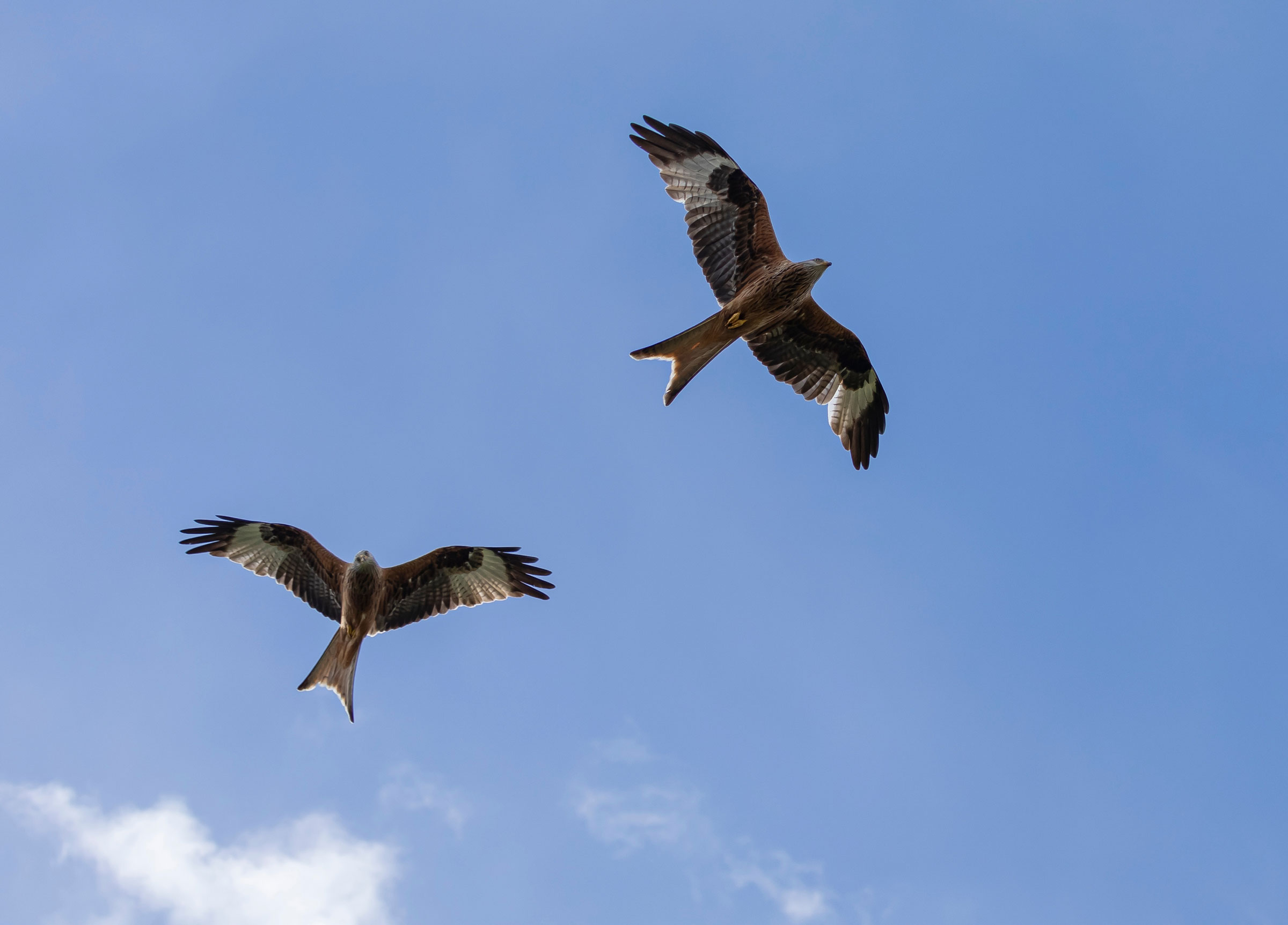
Unlike many other raptors, red kites can be watched for minutes at a time, sometimes soaring to heights that test the limits of human vision, sometimes precariously levitating above the treeline, heads bobbing and wings twitching like a marionette. It is a species that invites leisurely observation and, with it, veneration—and has done so for millennia. Archaeologists have uncovered evidence of Neanderthals using red kite feathers, probably for ornamentation, from at least 50,000 years ago. And 5,000 years ago, a community of modern humans was creating clay whistles that replicated the whistling cry of the bird.
Red kites have also invited scorn. The birds don’t discriminate between the flesh belonging to wild animal carcasses and that prepared for human consumption. “There is no limit,” wrote the Roman naturalist Aelian in the third century CE “to the robberies of the kite. If they can manage pieces of meat on sale in the market, they pounce upon them and carry them off.”
For a long time, a similarly adversarial relationship endured in the U.K. Known as “greedy gled” in the northern counties and “hawk of the sheep’s fleece” in Ireland, red kites were said to pinch bones from dogs and take clothes from washing lines to feather their nests. According to The Red Kite by the British naturalist and conservationist Ian Carter, the raptors were a common sight above most medieval urban environments, and they were protected by English royal statute in the 1400s for their ability to pick city streets clean of offal, rotting meat, and other animal byproducts. Improving sanitation in the following centuries, however, drove the red kite to the countryside, where the growing sophistication of firearms, poisons, and the conviction that the birds constituted a threat to pheasants and partridges led to a precipitous decline. By the start of the 20th century, the sight of kites gyring overhead was largely a memory. Red kites persisted only in select valleys in central Wales—an isolated, damp, and windswept region where sheep farmers were largely content to coexist with these soaring birds of prey.
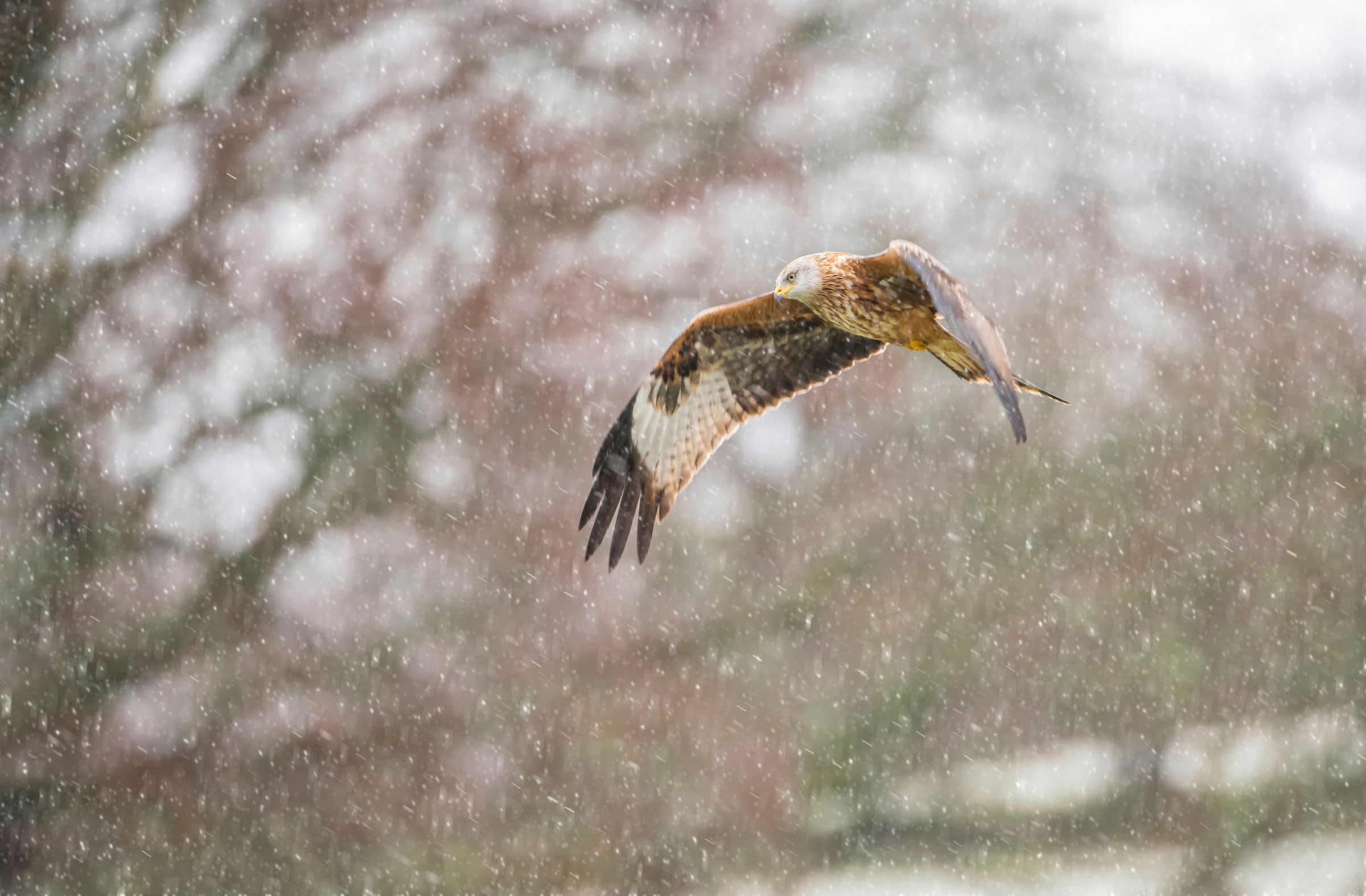
It was in those Welsh valleys in the 1980s that Carter caught his first glimpse of the raptor that would dominate his life’s work. At the time, Carter was a budding teenage birder and spotting a red kite was a rite of passage. “There was a real secrecy around exact locations [of nesting sites],” he tells me. The birds were still rare, and enterprising egg collectors sought them out because amateur oologists would pay handsomely for a red kite egg for their collections. Through word of mouth, however, Carter was directed to a hide. Once he was in position, the doe-eyed teen was suddenly greeted by the sight of a red kite bursting from the treeline and floating over the grassy fields ahead.
Many birdwatchers have since told Carter, tongue in cheek, that the magic of traveling to the Welsh uplands to see red kites has now faded—thanks to his good work. In the early 1990s, Carter was part of the team at the government conservation agency English Nature (now Natural England) tasked with reintroducing red kites to the Chiltern Hills in southern England, northwest of London. By then, public opinion on raptors had shifted from animosity to admiration. The organization hoped that as it shored up the national population of red kites, it could also leverage public affection for the raptors to clamp down on the use of rat poison and lead ammunition throughout the English countryside. Reducing both threats would benefit numerous other species along with the red kites.
Reintroduction, however, would have to come from somewhere other than Wales, both because the breeding population there was too small and because it lacked genetic diversity; scientists believe that at the nadir of the red kite’s Welsh exile, only two breeding pairs remained in the valleys. So project organizers turned to kites from Spain and Sweden to repopulate England and Scotland.
When Carter began traveling to Spain in 1995 to help collect birds to bring back to the U.K., Spanish colleagues started to express concerns that their population had also begun to decline. “I used to joke with them that, ‘Oh well, if the worst comes to the worst, you can have some of these birds back,’” he says. “And it literally was a complete joke.”
After being plucked from Spanish nests at four- to six-weeks old—crucially, old enough to regulate their own temperature but unable to fly off at the sight of climbers—the red kites were transported in small plastic crates to the U.K. Fed in small aviaries on a diet of wood pigeon, rooks, and rabbits, the raptors were then released at 10 to 12 weeks old. During the following year, the conservationists used radio tags to monitor the released birds.
Carter remembers the hours he spent bumping around country lanes in a van with a ham radio to find individual red kites, then observing them with binoculars. Such trips provided invaluable data, revealing how the raptors were acclimatizing to their new homes and what the impediments were to their expansion. Sometimes, Carter found dead birds that had been electrocuted by power lines, hit by cars or trains, or—less frequently—illegally shot or poisoned on private land.
Red kites spread slowly at first through England and Scotland—they explore new territory only tentatively. By then, farmers and gamekeepers had largely been convinced that the raptors posed no real threat to livestock and pheasants, so no longer shot or intentionally poisoned the birds, and soon the red kite population ballooned. Their flexible tastes proved their greatest asset. “It’ll eat virtually anything—dead stuff and live stuff,” says Carter, recalling birds he’s seen tenaciously pursuing roadkill on busy roads or plucking invertebrates from behind tractors dragging ploughs. “It’s just adaptable. It just fits the landscape perfectly.”
Photograph by David Pike/Nature Picture Library
Alfonso Godino hopes his red kites will adapt back to life in Spain in much the same way. Atop the feeding station, he finishes affixing the GPS tag to U25’s wing, while Marrero retrieves a box of lily-white baby chicken carcasses from the trunk of her boss’s Dacia Duster. A few yards away in an aviary, six of U25’s compatriots fly around their temporary home, roughhousing like teenagers as they clatter against its walls or hang upside down from its wire-mesh ceiling. In a few minutes, Marrero will scatter the chicks around the entrance of the aviary to lure the raptors out when the doors are finally opened. Sometimes it can take hours for them to pluck up the confidence to leave, but once they do, says Marrero, “they go like a fucking rocket.”
It’s a bittersweet day for the AMUS team: This is the last cohort of red kites they’ll release. When we met at a café in the community of Valencia del Mombuey earlier that morning, Godino explained how the team’s days would now be spent putting together the project’s final report, summarizing its achievements for the EU sponsors, and monitoring the red kites via their GPS tags—desk-based tasks that lack the excitement of fieldwork that’s defined this three-year project. Most of the birds tend to stick to the surrounding area. Still, many have strayed—some just over the border to Portugal, unwittingly reviving that region’s population, others to their likely doom in North Africa, where AMUS assumes the kites will be poisoned by farmers. Not that the release site itself is free of peril, adds Marrero, her eyes glazing at the memory of seeing 16 red kites savaged by Eurasian eagle-owls in the project’s second year.
All this work began in 2018, says Godino, after a survey of Extremaduran red kites found only a single breeding pair in residence. (A wider search the following year encountered another four.) The ornithologist reached out to his peers at RSPB in the U.K., Natural England, and Forestry England, a government agency, about the possibility of a reintroduction project using English birds. The British organizations were enthusiastic and, after demonstrating that poisoning—the main threat to the red kites’ survival in Spain—had been largely stamped out, AMUS received its first consignment of English raptors in 2022.
All 126 birds released over the course of the project were collected every June from forests in and around England’s Northamptonshire county under the direction of Simon Dudhill. Now that the project is coming to an end, Dudhill, an RSPB field officer, feels somewhat at a loss. “It’s a lot of intense work, and then it kind of stops,” says Dudhill. “I’m not quite sure what I’m going to do next May, or next March, to be honest with you.”
In 2025, the final year of collection, outsiders were excluded from viewing the collection process in person to reduce the risk of spreading avian flu. The prohibition, though, did not preclude filming. Five seconds of footage captured by one of Dudhill’s climbers shows a chick called U6 and her sibling in their nest atop the bole of a Northamptonshire oak, a pile of broken branches, and freshly delivered meat below them. While the sibling crouches, mouth half-open, doing its best impression of a corpse, U6 stands stock still with her eyes flared and wings half raised, as if desperately trying to remember the memo about reacting to humans while mid-pounce. Within half an hour, both red kites were lowered carefully to the ground in a padded bag. The sibling would later be hauled back up to the nest to prepare for a life spent soaring above English fields, while U6 would soon begin her momentous journey to Spain, her ancestral homeland.
U6 was not the last bird collected for Spain’s reintroduction project. That honor belonged to a different kite, U8, collected by Dudhill. “It was lovely, because I can’t climb trees,” he says, alluding to regulations that prevented him from doing so, rather than for any lack of ability. This oak tree, however, was low enough to lean a ladder against. Outfitted with a full harness as per the rules, Dudhill had climbed up and obtained his first, tantalizing glimpse of a pair of juvenile red kites in the nest, a sight he’d only been able to imagine over the previous three years while staring up at the trained climbers from ground level.
Dudhill’s relationship with the red kites he collected never ended with their dispatch to Spain. The RSPB field officer keeps in regular contact with Marrero about their progress, hailing the birds’ breeding success with grandfatherly affection and even flying out to Extremadura to watch them soaring high above the stooping cork trees. When we speak in September 2025, Dudhill is already looking forward to his next trip. “Those birds are mine,” he says, mostly joking. “And they’ll always be mine!”
Photograph by Terry Whittaker/Nature Picture Library
Now, however, AMUS is responsible for the kites. Since 2018, the organization has sought to carve out a 30,000-square-kilometer (11,600-square-mile) haven for red kites within the Extremaduran countryside, maintaining a dialogue with farmers and local hunting associations about the need to protect the birds from persecution and to find new ways for them to coexist.
Godino cheerfully recounts how he’s saved local goat and sheep herders thousands of euros in slaughterhouse fees by convincing them to haul any of their charges that died naturally up to the project’s several feeding stations, set up to provide healthy meat for several species of raptor. Once deposited on the hilltop, the carcasses quickly attract the area’s Griffon vultures and then red kites. (Later that day, we would disturb a large flock of vultures feasting on one such carcass they’d pulled inside out.) Hunters, too, will soon benefit from having red kites on the landscape. AMUS planted a copse of trees to create a habitat for rabbits, which will provide both food for the red kites and game for the local hunting association.
Power lines across the area have also been modified by the local utility company. Now that poisoning has largely been eliminated, electrocution has become the primary anthropogenic threat for red kites. Many of them get zapped after either perching atop the pylons—also known as transmission towers—or swerving to avoid low-hanging cables and, instead, crashing into the lines above. Elsewhere in Europe, environmentalists have called out power companies for failing to protect birds; perhaps in part to avoid similar bad publicity, Endesa, the local electric company, agreed to modify their infrastructure in a 2,500-square-kilometer (965-square-mile) radius around the release site. The lines now boast shiny plastic tags hanging off the wires to warn off birds in flight, while some 1,400 pylons have been adorned with new, inert perches. They’ve proved a hit with the class of ’24, explains Godino.
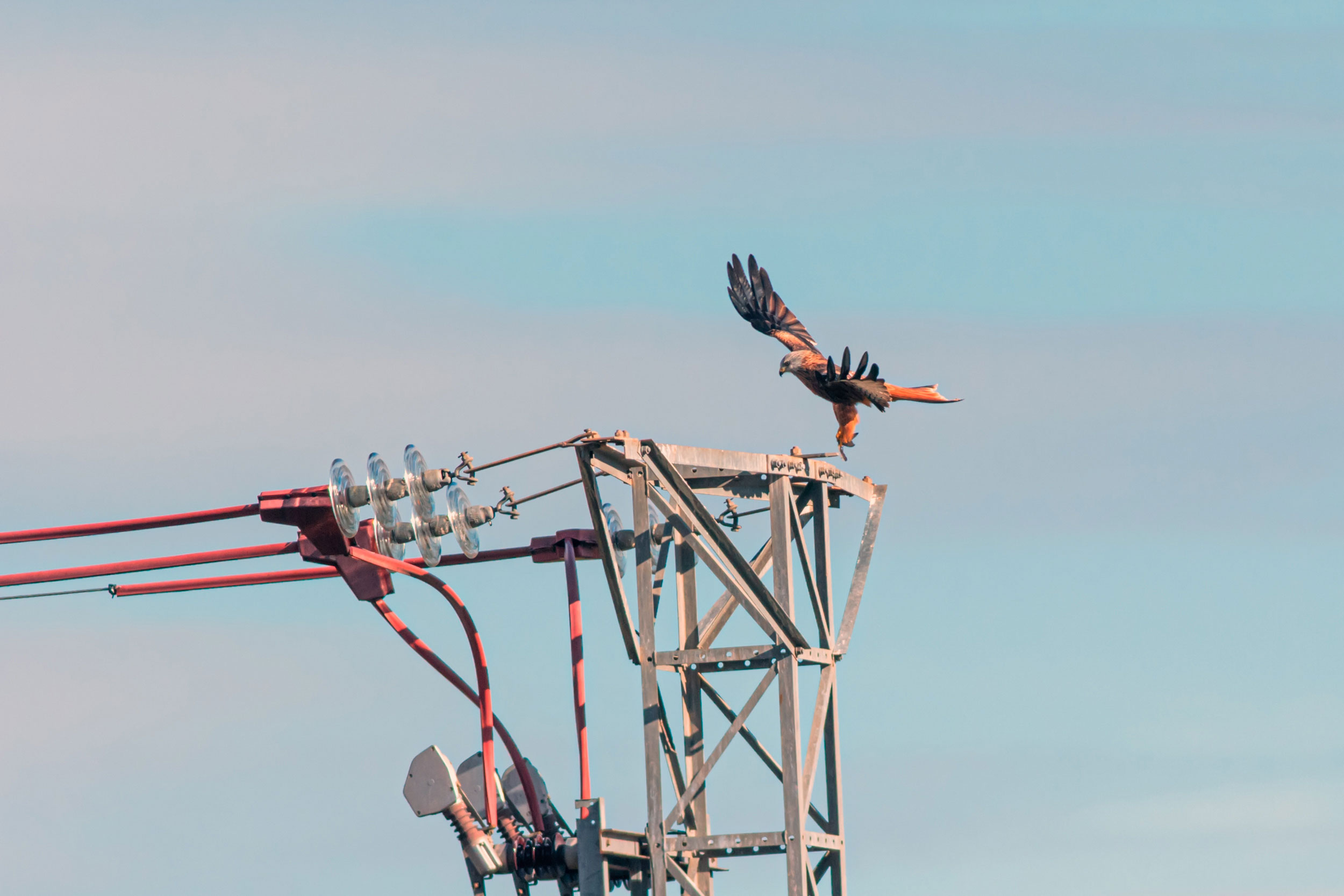
“We sent pictures to the electric company to say, ‘Hey, the red kites are using the pylon[s],’ and they were completely shocked,” he says. (Their initial panicked impulse was to assume the birds were again colliding with the structures.)
It’s also possible that Endesa’s cooperation has less to do with bad publicity and more to do with Godino’s ability to charm people in the project’s orbit—including a local apiarist who, upon spotting Godino and his team about to sit down for breakfast that morning before the release, stopped his van to hand them all samples of honey soap. That’s also the case with the workers filming the day’s proceedings. Godino is an adept media performer, offering suggestions for camera angles based on the best light, preemptively shushing chatty colleagues before takes, and effortlessly switching between English, Spanish, and Portuguese to deliver long, fluent orations on the goals of the reintroduction project. Such charisma—and relationship-building—may be as important to the reintroduction as the pluck and bravado of birds like U6.
Photograph by Albert Beukhof/Shutterstock
The success of any reintroduction is also, inevitably, dependent on how the species lives alongside its human neighbors. As I write these words, I admire one, then two red kites slowly circling above my garden in the U.K., which is how most Britons’ interactions with these raptors begin and end. Others have had more dramatic experiences: red kites snatching sandwiches out of their hands, swooping down on small dogs, or even, as one of my friends vividly relates to me, flying around and around their newly refurbished kitchen.
Such incidents may become more common in the years ahead as red kites continue to spread across the U.K., which Carter has estimated could host a maximum of 50,000 breeding pairs (a shade under the latest estimate for the world population).
Might the red kite’s reputation devolve back to that of the irritating avian kleptomaniac known to medieval chroniclers? Perhaps, says Carter, though most people seem glad to have them back, at least judging from the problematic practice among some people of feeding the raptors raw chicken in their back gardens. Climate change, too, is unlikely to hold them back; Carter speculates that higher temperatures will make it easier for them to glide onto the thermals that enable their daily hunting patrols. One wild card is the impact of black kites, which regularly visit southern England from mainland Europe. If black kites start breeding in the region, says Carter, “there’d be an element of competition, which might reduce the population of red kites. But I don’t think it would threaten it in any way.”
Godino believes there’s no definitive evidence that climate change will pose a challenge to red kites in Spain either (other researchers disagree). “The prediction here will be less rain and more heat,” he says, which might impact the availability of nesting trees, and which is why AMUS recently began planting fast-growing black poplars a few kilometers from the feeding station. As we walk by the saplings, wrapped in chicken wire to protect them from herds of goats tinkling their bells in the midday sun, the ground is bone dry, and a nearby river has been reduced to a stagnant pool. Soon, though, the rains will come, and paint the landscape green.
In time, Godino hopes to receive more birders from the U.K. His team works within a small rural community bled dry by depopulation and a revival of the red kites here, says Godino, along with the opportunity to glimpse populations of Spanish imperial eagles (Aquila adalberti) and cinereous vultures (Aegypius monachus), could diversify the raptor population enough to make Valencia del Mombuey (population about 700) an international birdwatching hub. That’s a big responsibility to rest on the wings of U25, who is thrust toward me for release; figuratively speaking, Godino says, “it’s your bird.” I politely decline. And so, U25 is released from the more confident arms of a Spanish TV anchor.
At first, U25 flies exactly like a bird who has never flown before, her outspread wings flapping madly against the warming air. Then, suddenly, lolloping onto an invisible eddy, she glides, circling around and around the low-slung valley, looking, as if there were any doubt at all, that she was born to it.
Photograph by Inaki Relanzon/Nature Picture Library
Hi, I’m Dave, the executive director of bioGraphic. (And that’s my dog, Finn.) Thanks for taking the time to read this story.
Stories like this simply don’t get produced without financial support from readers like you. bioGraphic is an independent non-profit—we’re not backed by a private company or owned by a billionaire. One-quarter of our budget comes directly from reader donations.
bioGraphic publishes environmental reporting that you can’t find anywhere else: deeply researched, trustworthy stories that are also beautiful and captivating to read. Right now, we need your help to raise $20,000 by October 2. Every dollar will go directly to more crucial reporting projects.
Around the world, governments are slashing funding for conservation and scientific research, placing even more ecosystems and wildlife at risk. At bioGraphic, we’re steadfastly shining a light on the threats to our planet’s incredible biodiversity. And we’re showcasing the hard work of people bravely taking action to protect at-risk species.
bioGraphic offers an antidote to apathy and doom-and-gloom news by revealing the wonders of the natural world and focusing on real solutions to big problems. When you finish a bioGraphic story, we want to leave you feeling informed, delighted, and inspired.
We don’t run ads or hide our stories behind a paywall. The readers who generously support bioGraphic allow our work to remain free for everyone.
Will you help us raise $20,000 by October 2?

Related Articles

Death by a Thousand Dams
Tens of thousands of small barriers hamper fish recovery in the northeastern United States. But while the demolition of big dams out west gets the most attention, a similar revolution is revitalizing northeastern streams and rivers—one tiny dam at a time.
The Unwilding of Patagonia’s Pollinators
In a region synonymous with wilderness, native bumblebees are being replaced by industrial worker bees—and ecosystems are paying the price.

The Corals That Shouldn’t Exist
Beneath Miami’s skyscrapers, a colony of corals defies expectations—and offers insight into other undersea urban ecosystems.
