
This story originally appeared in Garden & Gun, a lifestyle magazine about the Southern U.S. Read more stories like this at gardenandgun.com.
It’s a hot July night, and Mike Lloret and his crew are racing through the dark on an airboat. Miami’s high-rises offer but a distant, faint night-light, and Lloret wears a headlamp to illuminate his surroundings—a canal stretching straight as a runway with buttonwoods clinging to its high, muddy banks. About 40 meters ahead, in a flash, he spots a pair of red eyes spaced no farther than 3 centimeters apart. He whips the boat starboard and cuts the noisy engine at just the right moment. A crewmate hanging from the bow reaches into the water and scoops up a hatchling crocodile.
Lloret is a wildlife biologist and the principal environmental specialist at Florida Power & Light Company (FPL)’s Turkey Point Nuclear Plant—an unlikely spot, perhaps, for the comeback of the croc.
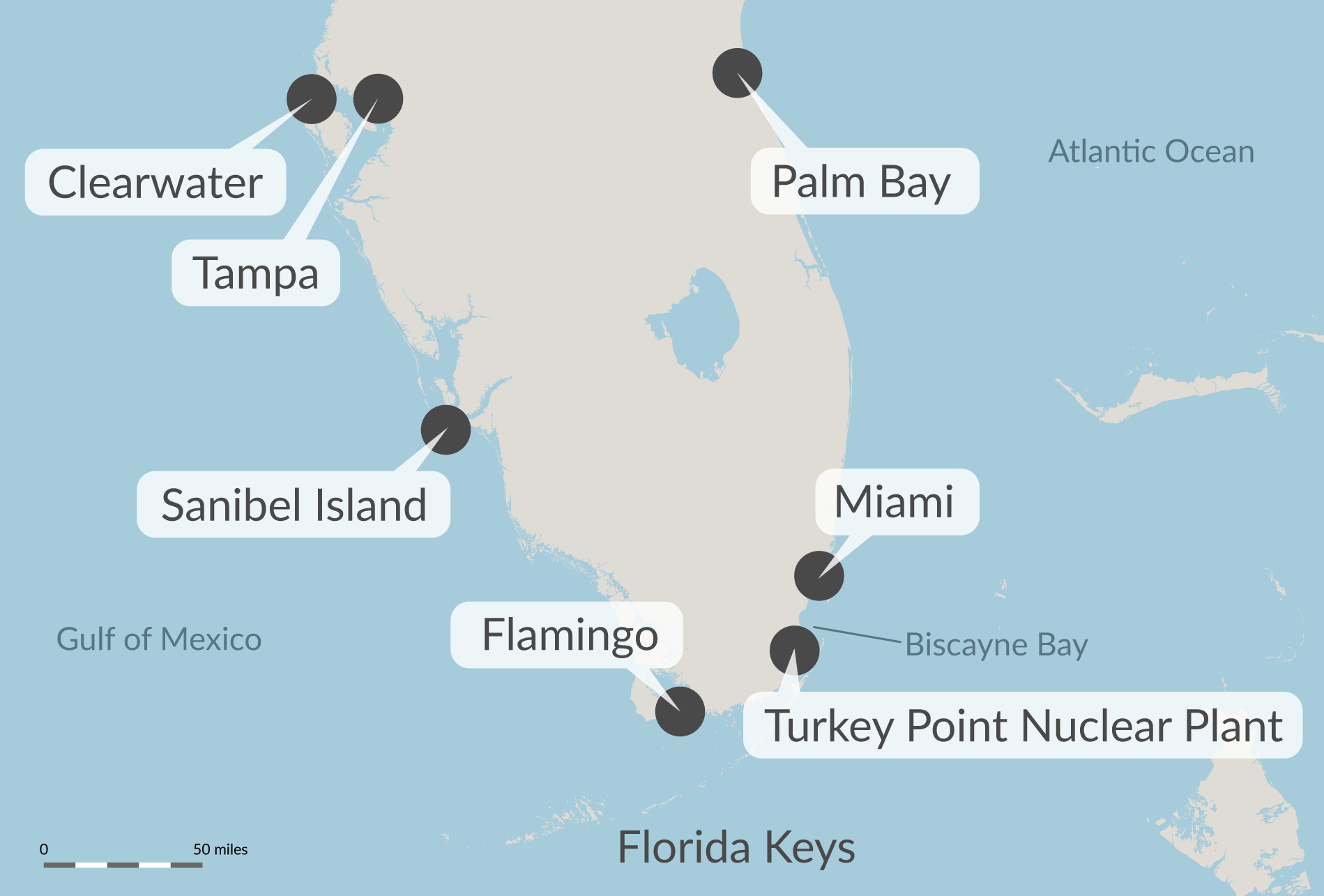
Turkey Point lies beyond civilized Miami, if there is such a thing. Forty kilometers (25 miles) south of the city and as far east of Homestead as you can get without splashing into Biscayne Bay, its engineers oversee the radioactive work of splitting uranium atoms to generate power for nearly a million South Florida homes. These reactors went live in 1972 and 1973 to facilitate the area’s booming population—the 1970 U.S. census recorded a 35 percent bump to Miami’s head count. That year, The New York Times reported, “Among the likely benefits of Florida’s population increase will be the addition of two more United States Representatives—bringing the total to 14—and more Federal judges and liquor licenses.”
The American crocodiles (Crocodylus acutus), however, were losing out. The same habitat they favor—isolated coves, mangrove swamps, and brackish intracoastal waterways—was being gobbled up by sunseekers. “Places they used to nest, like Miami Beach, were lost to development,” says Frank Mazzotti, a wildlife biologist, University of Florida professor, and the head of the university’s Croc Docs research team. Though the crocodile’s historical range in the U.S. hugged the coast from Palm Bay on the Atlantic side to Clearwater on the Gulf of Mexico, by the mid-1970s, the last 200 individuals of the species had been squeezed into the Florida Keys and southern Biscayne Bay, earning them a spot on the 1975 U.S. Endangered Species List.
At the time, Florida’s better-known reptile, the American alligator (Alligator mississippiensis), was recovering from its own population crash, mostly due to hunting. Florida, notably, is the only place in the world where alligator and crocodile habitat overlaps. But don’t confuse the two species. Crocodiles have longer, thinner snouts, and males can grow up to 6 meters (20 feet) long. They live in salt and brackish water, thanks to salt-excreting glands in their tongues. And compared to alligators and their global crocodilian cousins, American crocs are a shy bunch. While the Florida Fish and Wildlife Conservation Commission (FWC) has logged 487 unprovoked alligator attacks on humans since 1948, crocodiles have been implicated in just two—one of which involved a man swimming in waters teeming with crocodiles at 3 a.m.
• • •
Crocs on the Brink
Back in the era of disco, cocaine cowboys, and Dallas, however, there were no crocodile-filled waters in Florida. In the late 1970s, the University of Florida’s Mazzotti started his doctoral dissertation on the American crocodile. Over the course of four years, searching South Florida’s waterways three or four nights a week, he caught just 31 non-hatchling crocodiles.
But hope lurked in the shadows of the Turkey Point nuclear power plant—that towering symbol of modernity, built to air-condition the homes that had led to the crocodiles’ demise. In 1978, a staffer there stumbled upon a clutch of eggs. As it turned out, the 270 linear kilometers (168 miles) of cooling canals Turkey Point relied on to condense steam and produce energy also provided an ideal habitat for crocodiles: High berms allowed females to safely deposit eggs; the isolation protected them from pesky humans; and plenty of fish and fowl flourished in the waterways to sustain a growing population. (“A crocodile will fight you for a blue crab,” says Mazzotti, noting that American crocodiles aren’t the large-mammal-munching apex predators we might imagine them to be.)
Over time, FPL committed to making its canals and pristine mangroves even more hospitable to crocodiles. Workers, for example, remove invasive flora from berms, and use amphibious backhoes to dig small ponds on them, providing a source of fresh water the hatchlings require for the three months it takes for them to develop salt glands. In dry spells, Turkey Point can pump fresh water into the canal system to maintain the crocodiles’ ideal salinity. “In other areas, it’s extremely difficult to accomplish what we have,” says Lloret, who joined the Turkey Point team in 2017. “We own the land. We have the ability to modify the land. We have a good grasp on what crocodiles like and need, and we have resources.”
Since that first crocodile nest sighting in 1978, biologists have tagged more than 10,000 hatchings at Turkey Point, whose canal system now hosts the highest density of crocodiles in North America. In 2007, the species was downlisted from endangered to threatened, and this year’s hatchling count holds more promising news.
• • •
Make Way for Hatchlings
Each spring, Lloret stalks Turkey Point’s berms in search of crocodile nests, which hold an average of 30 to 60 eggs. After a three-month incubation, baby crocodiles start to vocalize from inside their shells when ready to hatch. (Lloret describes the sound as a pip, but online commenters think the pitch is more intergalactic laser beam.) At the sound, the mama crocodile digs up her nest. She might gently crack a shell to help speed a little one’s emergence. Then the sharp-toothed predator scoops up the newborns in her mouth and delivers them, ideally, to fresh water.
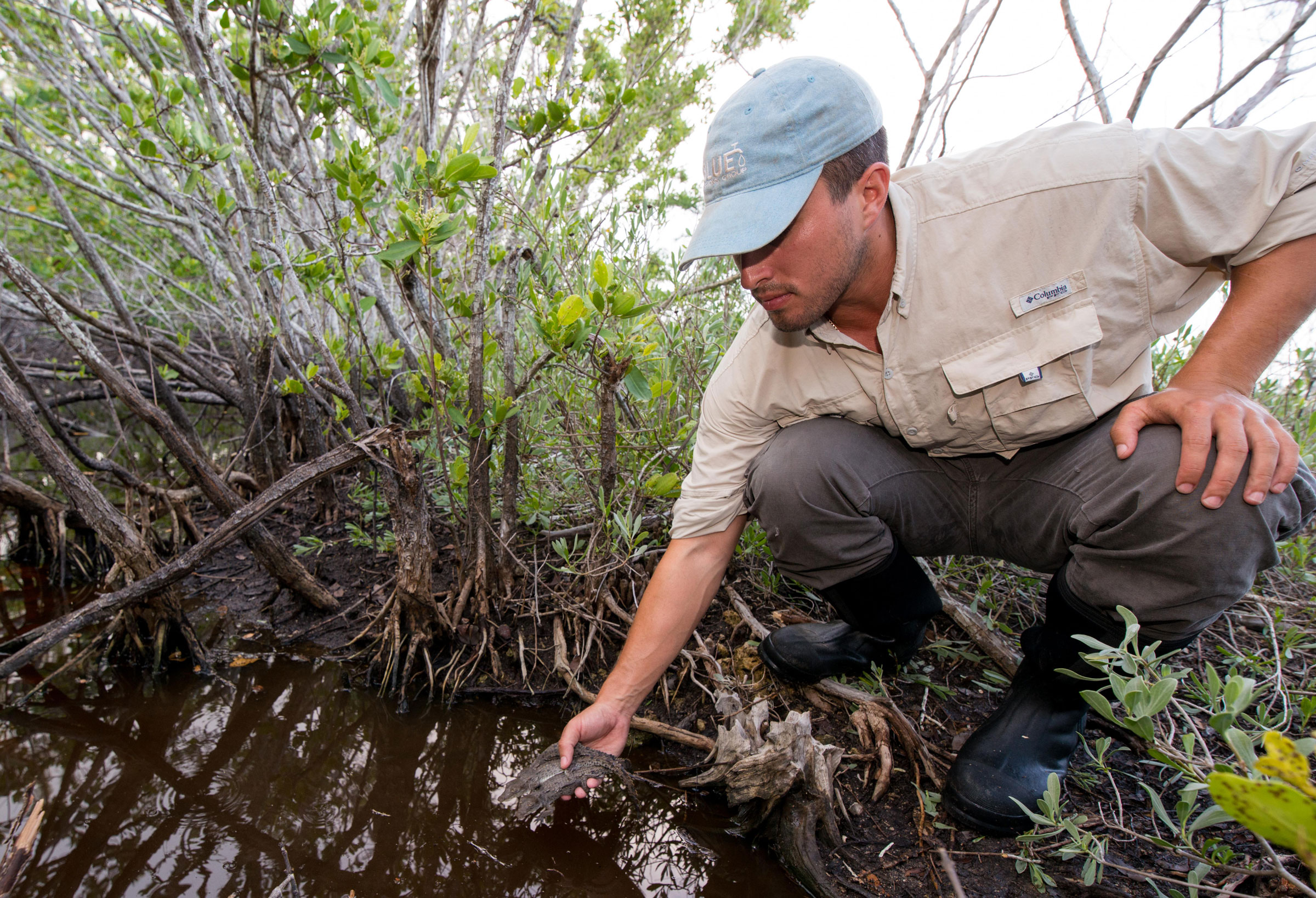
From around June 25 to August 15, Lloret and his crew scour the canals two nights a week in waders, safety glasses, and noise-canceling earmuffs. His men are Turkey Point landscapers, foremen, and mechanics who sign on for the thrilling, mosquito-plagued seasonal work. “I can teach anyone how to catch a crocodile,” Lloret says. Together, the group looks for mud indentations from where mothers slide from land to water. They spot eggshell fragments bobbing in mangrove roots. They climb berms to look for babies swimming in ponds. They ignore the green glowing eyes of a thousand crabs and spiders. “The really exciting part is seeing little beady, red eyes looking back at you,” says Lloret, who strives to capture crocodiles within 24 hours of them hatching. “We’re blinding them with our headlamps. It’s like an alien abduction.”
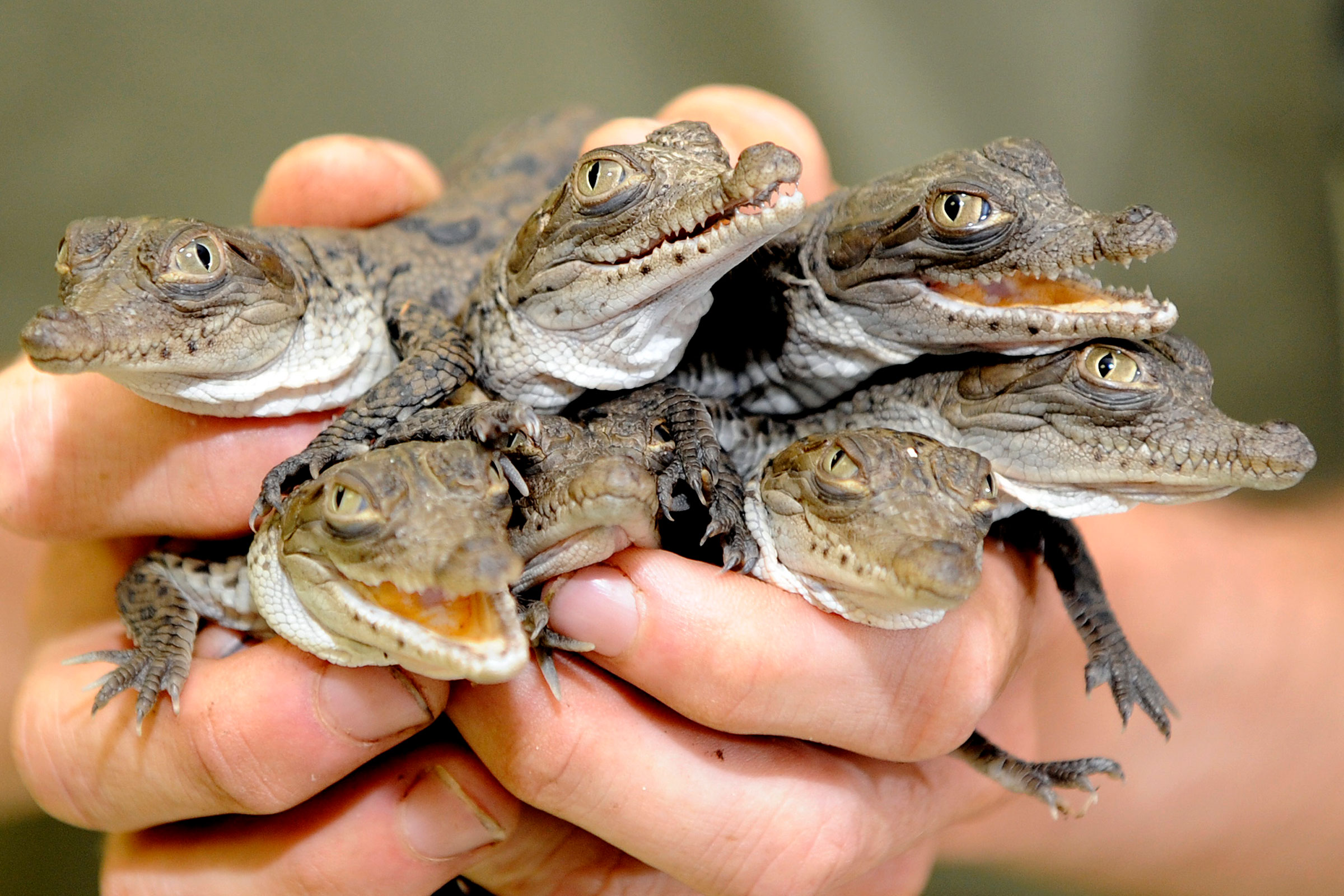
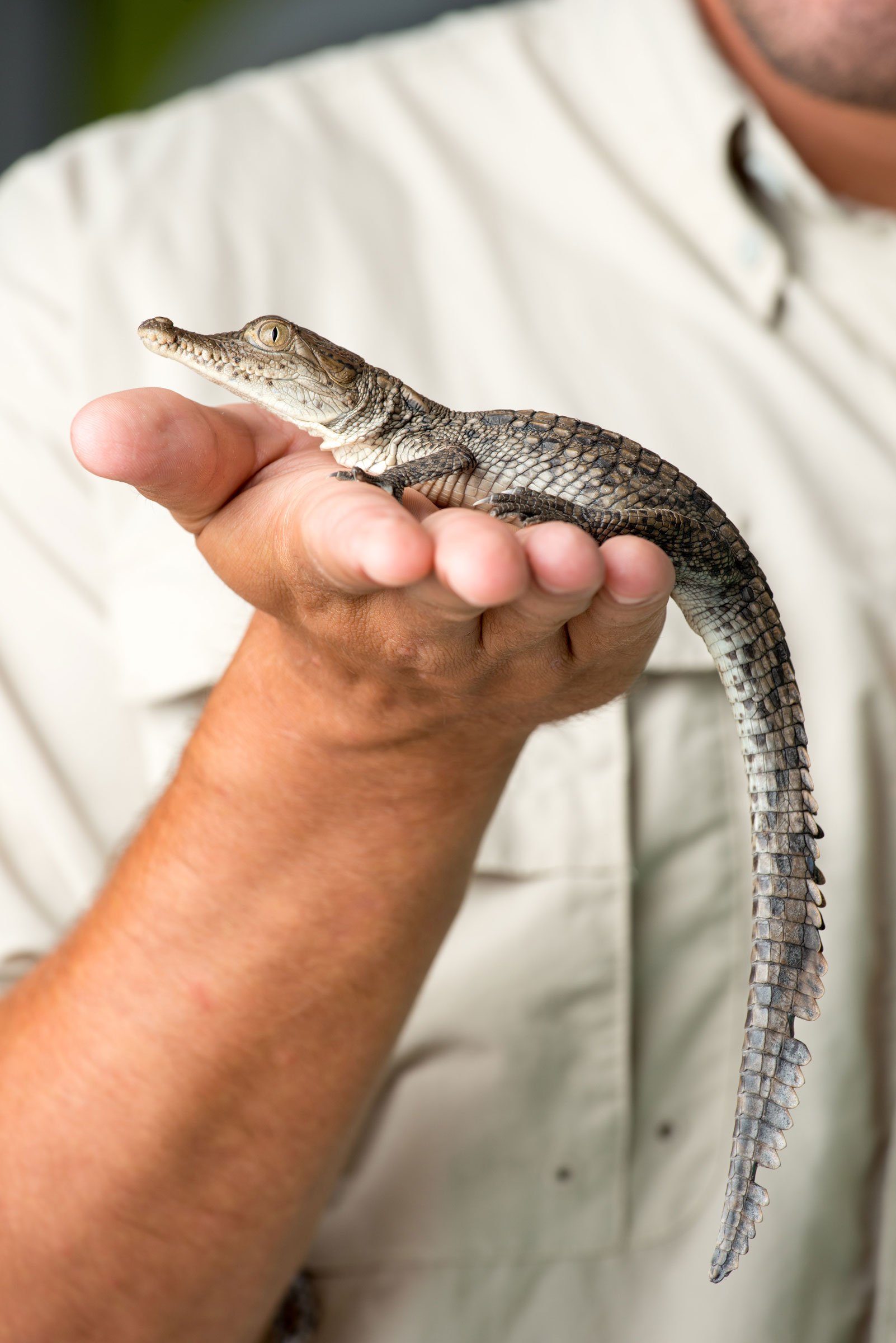
The men place the crocodiles, each then 25 to 30 centimeters (10 to 12 inches) long, into mesh bags and deliver them to an on-site lab for weighing and measuring. Lloret inserts a tiny microchip into their tails and cuts a distinct pattern into their scutes for future identification. The hatchlings then spend a few days plumping up in tubs of fresh water before returning to their wild, man-made habitat.
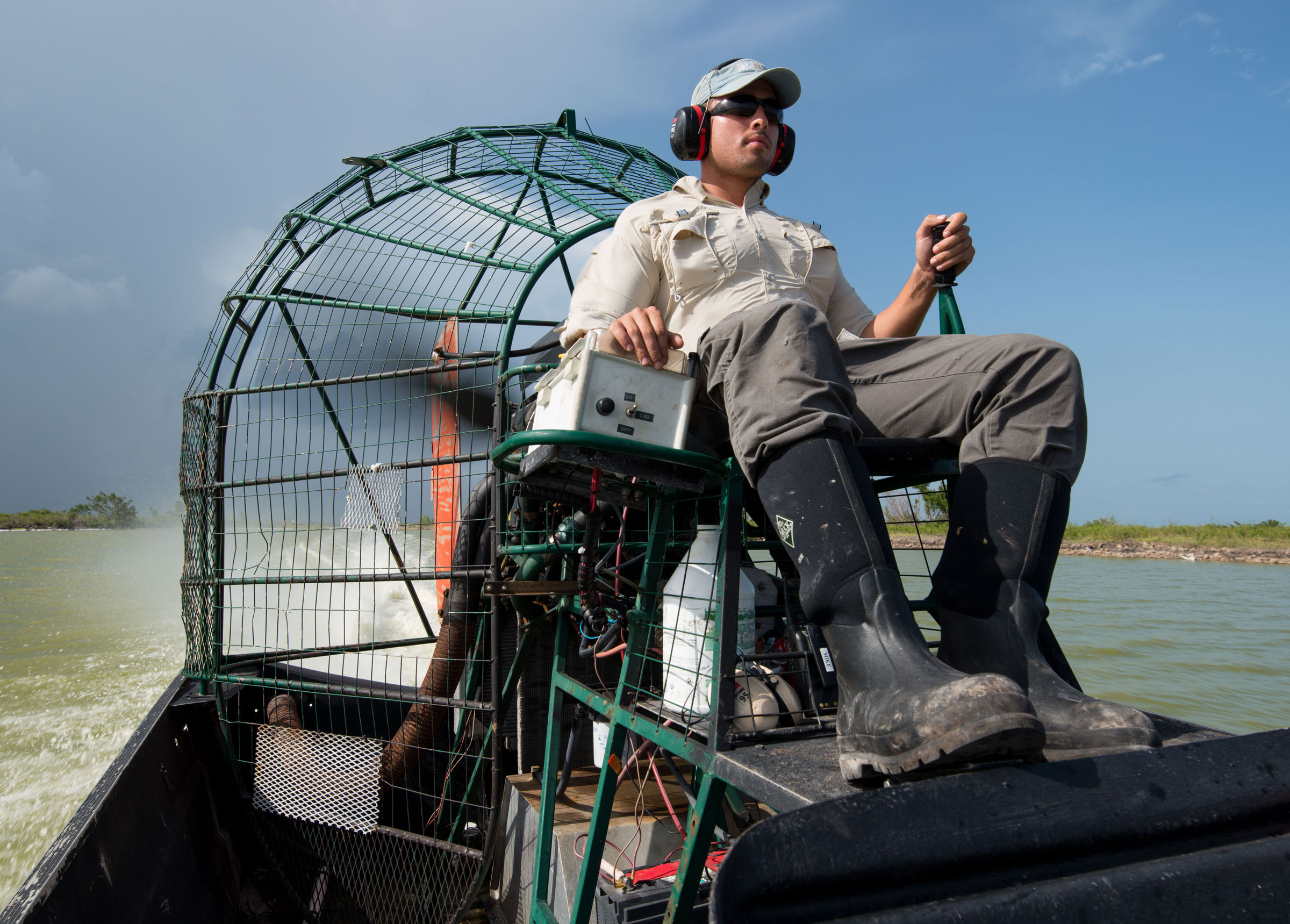
The team had to do a lot of this in 2025: It’s been a historic season for crocodile hatchlings, Lloret says. His group collected 606 tiny crocodiles from an estimated 30 nests—the first time in the program’s 47 years that Turkey Point surpassed 600 hatchlings. “Lovingly, we’re calling it the 600 Club,” he says. “Everyone is excited.”
Lloret’s numbers support a positive overall trend for crocodiles in South Florida. This year, Mazzotti’s Croc Docs team, which monitors hatchlings outside of Turkey Point, located 178 nests, including one on Sanibel Island and four by the Marco Island Executive Airport. They found the majority of their nests, however, near Flamingo in the southern reaches of Everglades National Park. In 1986, biologists found a single nest in the area; in 2025, there were 129.
Crocodiles have even started to reclaim parts of their native range—and, in some cases, edge past it, as the planet warms and mangroves spread north. A crocodile born and microchipped in Turkey Point, for instance, was discovered in Tampa. “Crocodiles are on the move,” Mazzotti says. “The population is increasing, and they are starting to disperse.”
The FWC estimates at least 2,000 crocodiles now live in the state, and agency researchers are currently studying how the reptiles travel through human-inhabited ecosystems. “They are able to swim dozens of miles in only a few days,” explains Vinnie Deem, the leader of the FWC’s Crocodilian Research Program. “So a croc spotted in an urban area today may be out in Everglades National Park tomorrow and vice versa.”
Female crocodiles, Lloret confirms, often return to the same nesting grounds year after year. For their efforts—the mothers, biologists, backhoe drivers, maintenance crews—maybe one hatchling from each nest will survive to adulthood. (Its siblings will become snack food for wading birds and other crocodiles.) In 10 to 15 years, that single holdout hatchling will grow large enough to reproduce. “Crocodiles are a long-lived species,” Lloret says. “We don’t see big effects immediately. But they are wired to survive.”
Hi, I’m Dave, the executive director of bioGraphic. (And that’s my dog, Finn.) Thanks for taking the time to read this story.
Stories like this simply don’t get produced without financial support from readers like you. bioGraphic is an independent non-profit—we’re not backed by a private company or owned by a billionaire. One-quarter of our budget comes directly from reader donations.
bioGraphic publishes environmental reporting that you can’t find anywhere else: deeply researched, trustworthy stories that are also beautiful and captivating to read. Right now, we need your help to raise $30,000 by October 2. Every dollar will go directly to more crucial reporting projects.
Around the world, governments are slashing funding for conservation and scientific research, placing even more ecosystems and wildlife at risk. At bioGraphic, we’re steadfastly shining a light on the threats to our planet’s incredible biodiversity. And we’re showcasing the hard work of people bravely taking action to protect at-risk species.
bioGraphic offers an antidote to apathy and doom-and-gloom news by revealing the wonders of the natural world and focusing on real solutions to big problems. When you finish a bioGraphic story, we want to leave you feeling informed, delighted, and inspired.
We don’t run ads or hide our stories behind a paywall. The readers who generously support bioGraphic allow our work to remain free for everyone.
We reached our goal, but there’s time left. Will you help us smash our original goal and reach a new goal of $30,000 by October 2?

Related Articles
The Trouble with Tamarisk
Twenty-five years ago, land managers unleashed a beetle to control an invasive tree sucking rivers dry. But water levels haven’t risen—and the real villains are still causing trouble.
Death by a Thousand Dams
Tens of thousands of small barriers hamper fish recovery in the northeastern United States. But while the demolition of big dams out west gets the most attention, a similar revolution is revitalizing northeastern streams and rivers—one tiny dam at a time.
The Unwilding of Patagonia’s Pollinators
In a region synonymous with wilderness, native bumblebees are being replaced by industrial worker bees—and ecosystems are paying the price.
