
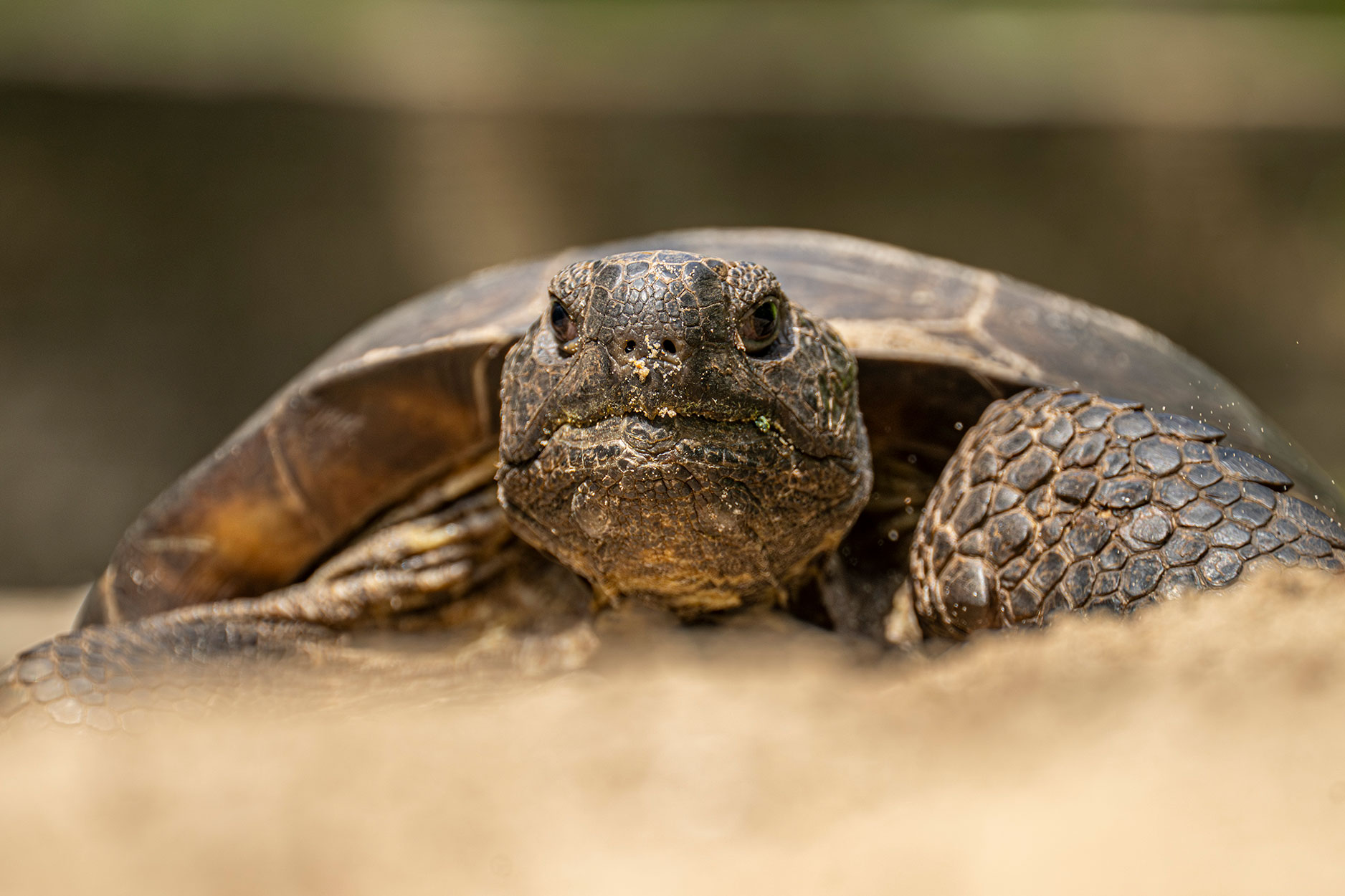
Photographs by Nicholas Conzone
On a dripping-hot morning in July, the kind of day that makes you wonder why anyone moves to Florida, I exited the interstate south of Sarasota and headed toward a ragged 4-hectare (10-acre) field sandwiched between Hollywood Boulevard and a Walmart Supercenter. Unsure where to pull off the road, I ended up on the boulevard and was forced to follow its circuit around a stormwater retention pond, which would provide a “waterfront view” to the future residents of a not-yet-built apartment complex.
The landscape bore additional marks of the rapid population growth that characterizes this part of Central Florida: rows of rooftops marching along the horizon to the west, a roadside sign proclaiming the future site of storage condos, the traffic-choked street leading back to the interstate. Finally, I spotted a black Toyota 4Runner parked in the field I was searching for. Its bumper sticker read “Protect the Gopher Tortoise License Plates Now Available!” A QR code was plastered next to the plate, which featured a bow-legged tortoise with an outstretched neck, framed by spiky palmetto fronds.
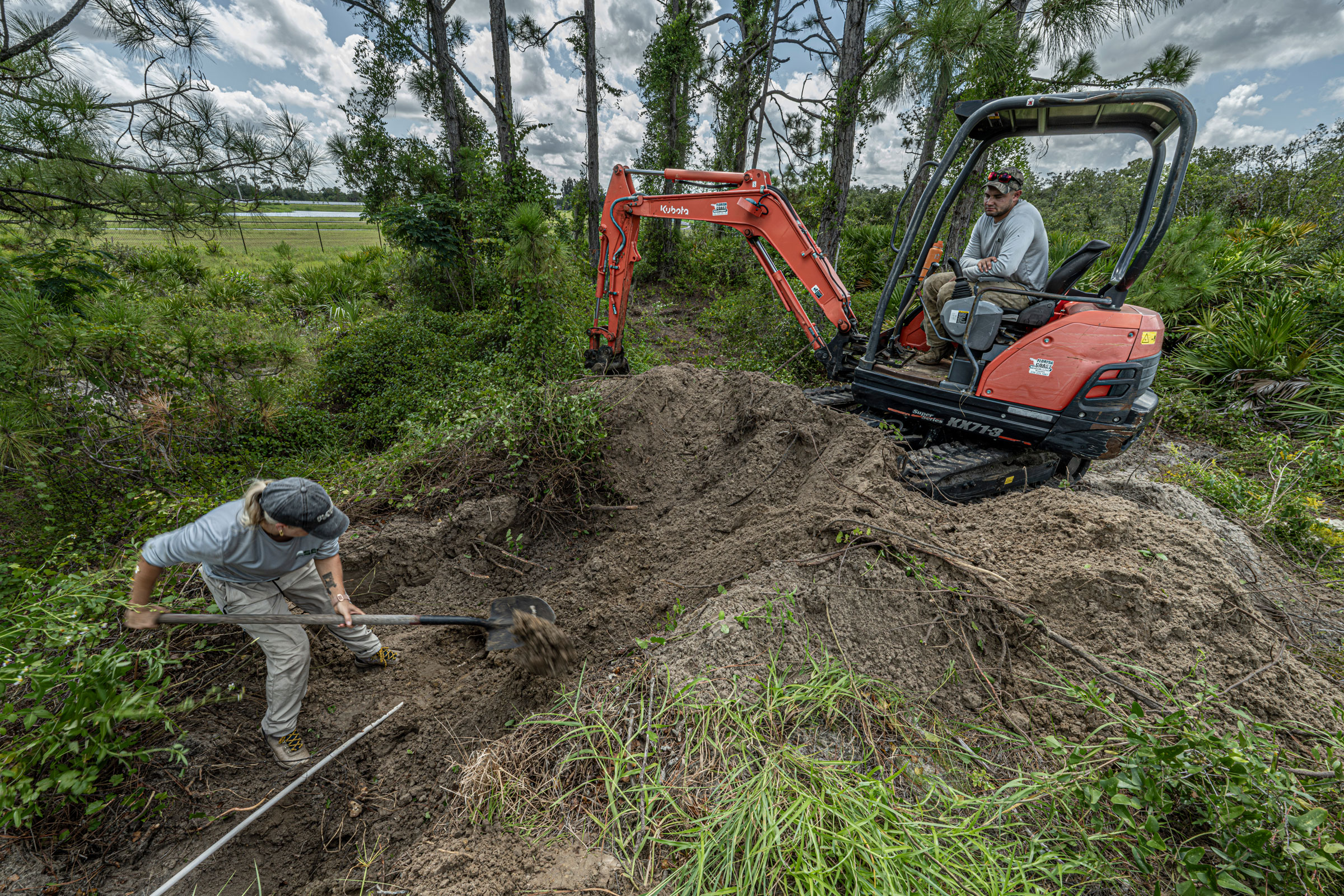
The vehicle’s driver, Neal Halstead, stood about a hundred meters off the road with a young man, a young woman, and a bright orange backhoe. I parked and trudged toward them through knee-high grass, brushing aside clumps of dog fennel. Halstead, a biologist for the Florida-based nonprofit Wildlands Conservation, had invited me out to witness his day’s work: training two employees from a local civil engineering firm to excavate gopher tortoises from their burrows and safely ferry them to a location not destined for the construction of multifamily homes or a parking lot.
Moving gopher tortoises out of the way of future development is, for now, Florida’s best solution for protecting a species that has been state-listed as threatened since 2007. The relocation program has been in place since 2009, requiring developers or anyone wanting to build on existing tortoise habitat to hire authorized individuals—like Halstead—to relocate the animals to designated recipient sites. These are parcels of land, typically privately owned, that have been deemed adequate for supporting gopher tortoises, pug-sized reptiles that were once common across the Southeast United States.
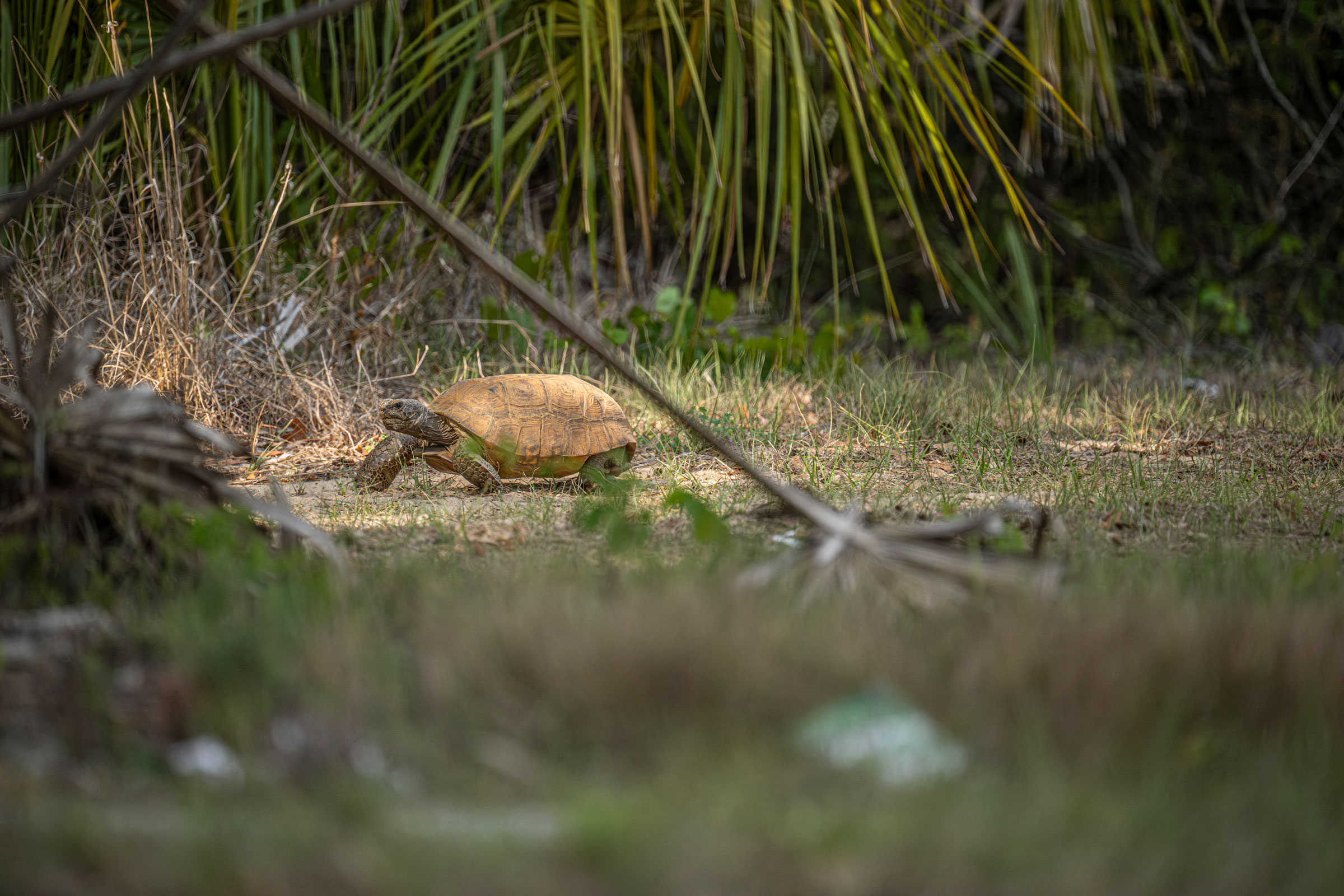
Roughly 900 people move to Florida every day, equivalent to adding a city about the size of Orlando each year, and the state’s booming population means that ever more tortoise habitat is vanishing beneath concrete. Between 2009 and 2023, more than 97,000 tortoises were shuttled around the state to accommodate new development projects, making the gopher tortoise the most-relocated animal in the Southeast U.S. Halstead suspects that around one-third of the entire gopher tortoise population in Florida has been relocated over the past 15 years, though he says that’s a very rough estimate.
Now, with the sun breathing hot down our necks, we moved from one burrow to the next, each marked with a flag. Gopher tortoise burrows are unassuming holes in the ground, just wide enough to admit the tortoise that made them, but they can extend up to 12 meters (40 feet) deep. There were 22 total in the field that day, but Halstead figured less than half would actually be occupied.
The backhoe rumbled atop each burrow, its robotic arm swinging stiffly. With surprising speed, the machine opened craters in the ground big enough to swallow a small shed. The gaping holes made it easier to access the tortoises, which tend to retreat as far as possible into their burrows when the earth above splits open.
While excavating one burrow, which turned out to be vacant, we hit a clutch of long-abandoned eggs. As I tried not to gag on the suddenly rancid air, Halstead explained that survival rates for gopher tortoise eggs and hatchlings are extremely low—three-quarters of gopher tortoise eggs never hatch, and 90 percent of juvenile tortoises don’t survive their first year. Because mortality rates for young tortoises are so high, it’s critical that nearly all adults live long enough to reproduce. Otherwise, their numbers will dwindle.
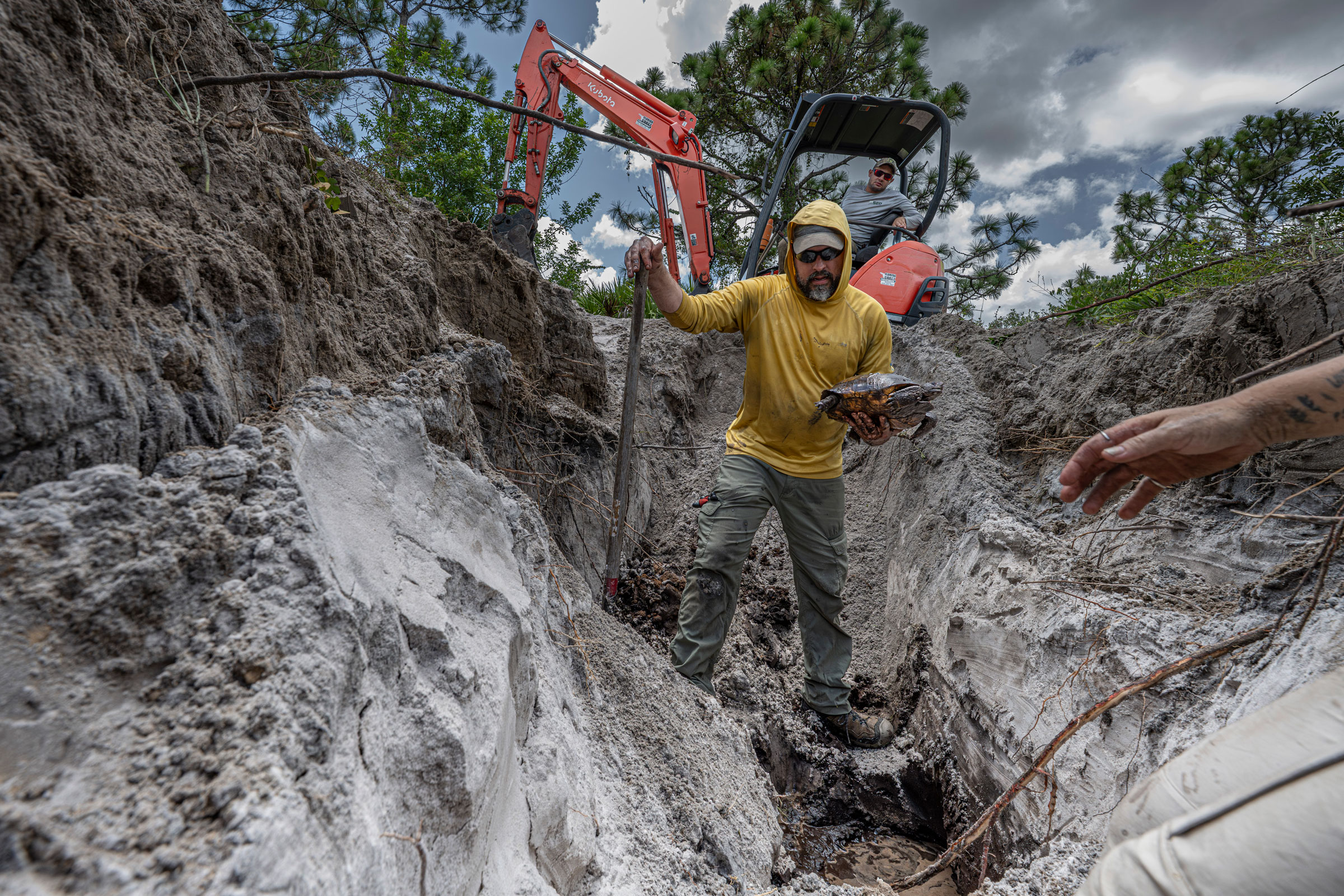
After an hour, we unearthed the first gopher tortoise of the day, an adult female. We stood on the edge of the human-sized hole the backhoe had made, while Halstead carefully lifted out an animal small enough to fit in a cake pan. He was generally silent as he handled the tortoise, his mouth set in grim apology. The female was tucked into a plastic bin with air holes and left in the engineering company’s truck with the AC running. Later they’d do a health check on her and the other tortoises that would be retrieved during the day, before transporting them to their destination.
Such relocation efforts have reshaped Florida’s gopher tortoise population. Meanwhile, the eye-popping financial incentives for landowners to receive displaced tortoises has turned the program into a lucrative cottage industry. But the ordeal is stressful for the animals, forcing them to adapt to new locations among new tortoises, some of which may carry undetected diseases. Biologists like Halstead have struggled to gain an understanding of how relocated tortoise populations are faring, leading them to wonder: Will relocation help the species recover from its decades-long decline, or merely delay its slide toward extinction?
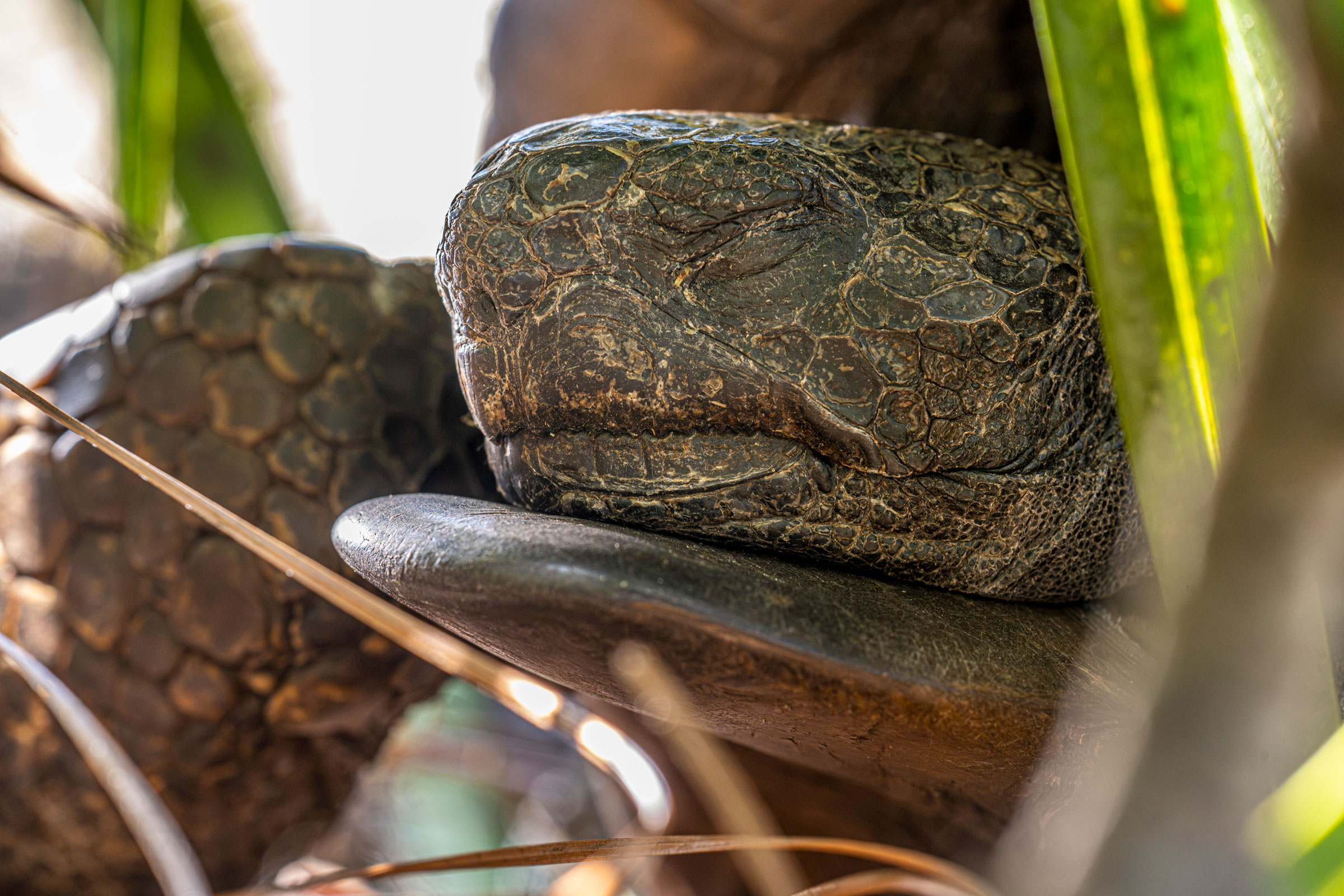
Gopher tortoises have been around for some 60 million years, making them one of the oldest species on the planet. Individuals look almost that ancient, with dusty shells, thick dinosaur skin, and permanently disgruntled expressions. They can live nearly as long as humans and, like humans, reach sexual maturity as teenagers.
Gopher tortoises’ longevity, both as individuals and as a species, may be due to a simple strategy: When in doubt, hide out. They typically leave their burrows only to forage or to find a mate. Yet they’re generous about sharing their living quarters. Scientists have documented more than 350 species occupying gopher tortoise burrows—including snakes, rabbits, rodents, frogs, skinks, and countless invertebrates—all seeking shelter from such threats as fire, excessive heat, and predators.
So important is the gopher tortoise’s role as refuge-maker that it is considered a keystone species in the longleaf pine savannas it has historically inhabited. These sunlit forests, dominated by sky-scraping pines and a thick understory of palmetto and wire grass, once stretched across much of the Southeast. As surely as the trees’ root systems, gopher tortoises keep these ecosystems—where they still exist—anchored in place.
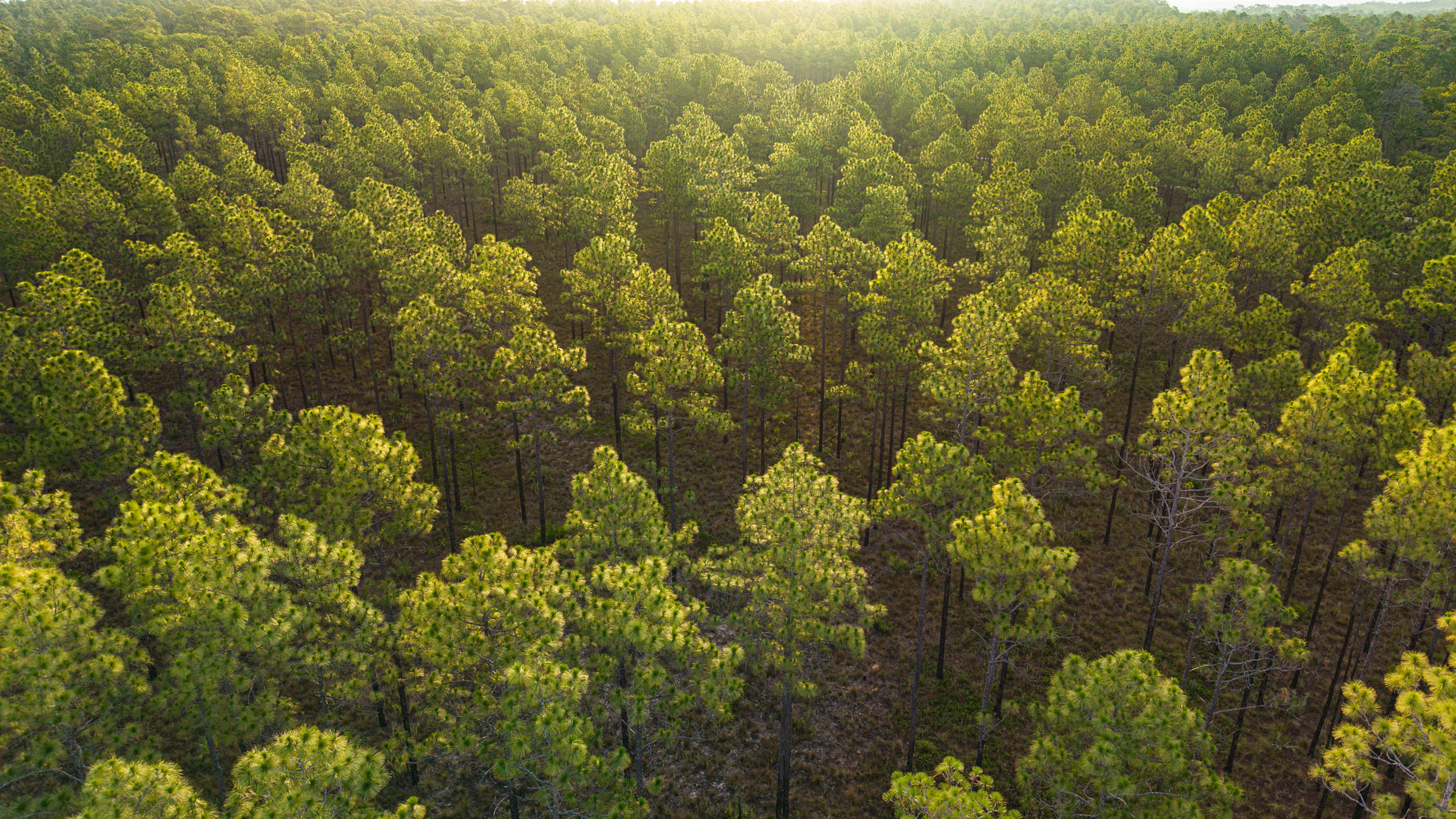
But the animals’ preferred habitats are also coveted by humans. More than 95 percent of longleaf pine forests have been logged or cleared for development, and other dry, sandy upland areas that tortoises inhabit are often targeted as convenient building sites. Habitat loss is the main reason that gopher tortoise populations have declined by 80 percent across the Southeast. They are nearly extinct in South Carolina and Louisiana, and rare in Mississippi and Alabama. Florida now hosts the largest remaining gopher tortoise population in the world.
On a sparkling morning in September, I visited an intact stretch of longleaf pine savanna in Florida’s Panhandle. The forest lay within the Nokuse preserve, the largest privately owned conservation area east of the Mississippi River. Most of Nokuse’s 22,200 hectares (55,000 acres) were once devoted to agriculture and forestry. But years of painstaking restoration efforts have coaxed back the original habitat—as well as its most important engineer.
Nokuse is now home to one of Florida’s largest gopher tortoise populations, almost all of them refugees. Over the past two decades, the property has received more than 6,000 tortoises displaced by development in other parts of Florida.
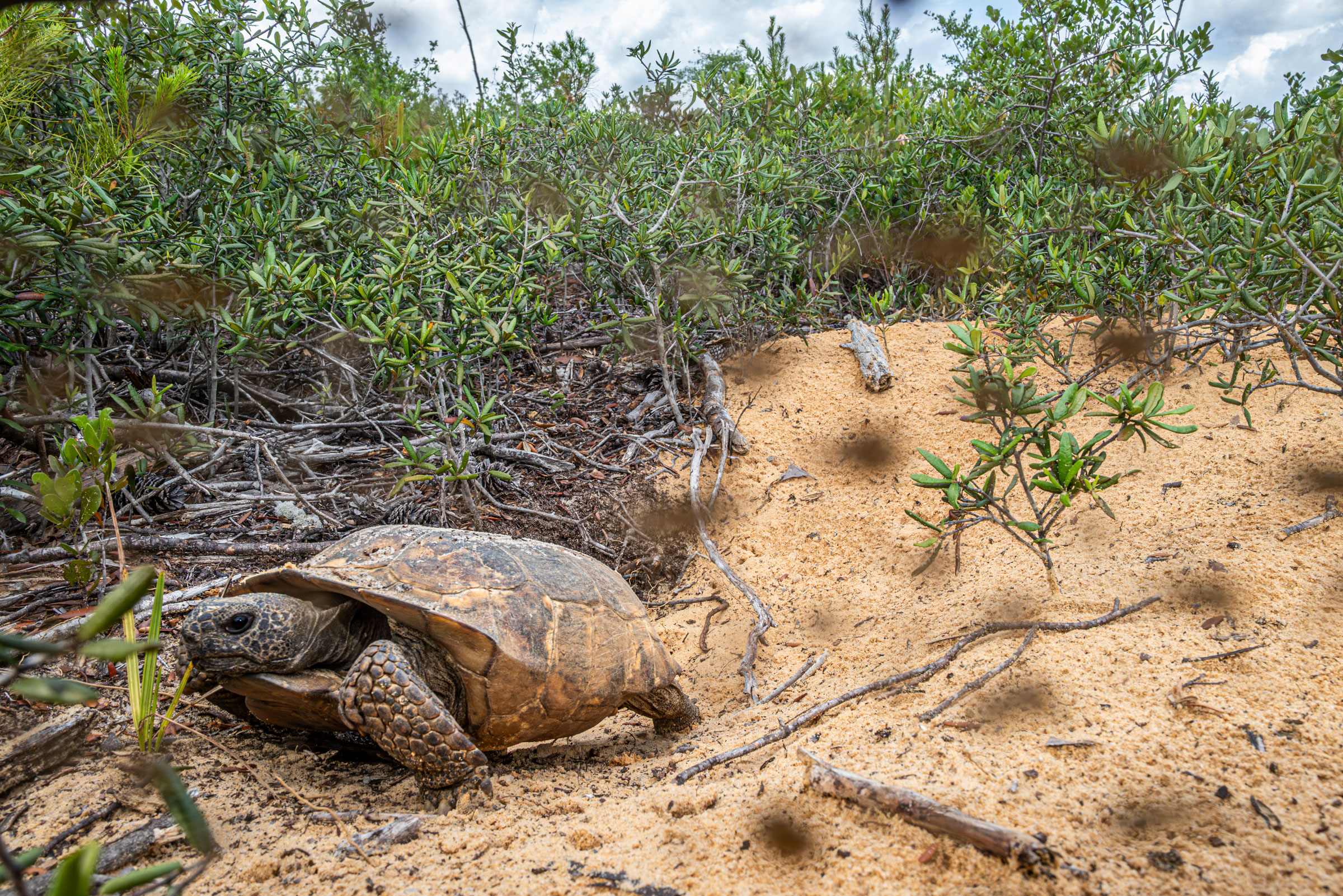
I met the director of the preserve, Matthew Aresco, outside his office and shook his hand somewhat shyly, feeling like I was meeting a celebrity. Twenty years ago, Aresco’s investigative work catalyzed a new approach to gopher tortoise conservation in Florida, preventing tens of thousands of tortoise deaths.
Before Aresco came along, Florida’s policy toward gopher tortoises was to allow developers to pave over their burrows if they paid a mitigation fee that would be used to preserve tortoise habitat elsewhere. Tortoises and other animals that used their burrows were thus legally crushed under bulldozers or, worse, buried alive, which guaranteed them a slow death by starvation or suffocation.
In 2005, Aresco was finishing his dissertation on freshwater turtles at Florida State University, when he asked the question that no one, apparently, had asked yet: Just how many gopher tortoises had been killed by the state’s “pay-to-pave” program?
He submitted a public records request to the Florida Fish and Wildlife Conservation Commission (FWC), the state agency that administered the program, to examine the permits that allowed developers to pave over burrows. Based on estimates in the permits, Aresco calculated that more than 68,000 tortoises had perished this way. He later found—by submitting another public records request—that of the US $78 million the state had earned in mitigation fees from developers, only a small fraction had gone to acquiring new gopher tortoise habitat, making up for just 4 percent of what had been lost. Most of the money had been folded into the Florida legislature’s general budget.
“It just made me so mad,” Aresco told me. He took what he had found about tortoise deaths to a reporter at the Orlando Sentinel, and the story began breaking in news outlets across the state, sparking public outrage. In 2007, the state bowed to pressure and ended its pay-to-pave policy. That same year, the gopher tortoise was upgraded from a species of concern to a threatened species in Florida. Two years later, the state formally implemented the gopher tortoise relocation program, which has seen sharply increasing participation almost every year since.
While the program may have soothed the public conscience over the fate of Florida’s gopher tortoises, it hasn’t totally quieted the worries of Aresco and other tortoise advocates. As Aresco pointed out: “Not every tortoise that gets moved lives happily ever after.”
Relocating wildlife threatened by development—referred to as “mitigation-driven translocation” in scientific literature—has become an increasingly common approach to conservation as human populations and development have boomed, not just in Florida but across the world. Yet there’s little evidence supporting its effectiveness, generally because the monitoring of relocated species is patchy at best. A complex web of factors determines whether animals survive and thrive in a location they did not choose for themselves; one 2015 study pointed out that because relocation programs often fail to document outcomes, it’s unclear “whether such animals are simply being spared a socially unacceptable death via bulldozer, only to perish out of view at a release site.”
When it comes to Florida’s gopher tortoises, scientists can’t say yet whether translocation is working. Aresco and other researchers are trying to understand the effects of translocation on tortoises; early results have been disheartening, in part because gopher tortoises reproduce so slowly that they need a high annual adult survival rate—as high as 98 percent by some calculations—to sustain their populations. That leaves very little room for error in the state’s relocation program.
“What we’re finding is, for relocation, you can’t achieve that number,” Aresco said. “And anyone that says otherwise is lying. … There’s just too much stress. There’s too much acclimation that the tortoises need to do. And many of them die.”
Even at Nokuse, where Aresco and his team do everything possible to care for translocated tortoises, the animals show signs of stress. New arrivals at all recipient sites are released into fenced enclosures; without the fences, the tortoises would trudge for miles in the direction of their old home, risking exposure to predators and other dangers. Recipient sites often dig “starter burrows” for new tortoises, with the hope that it will encourage them to settle underground and acclimate faster.
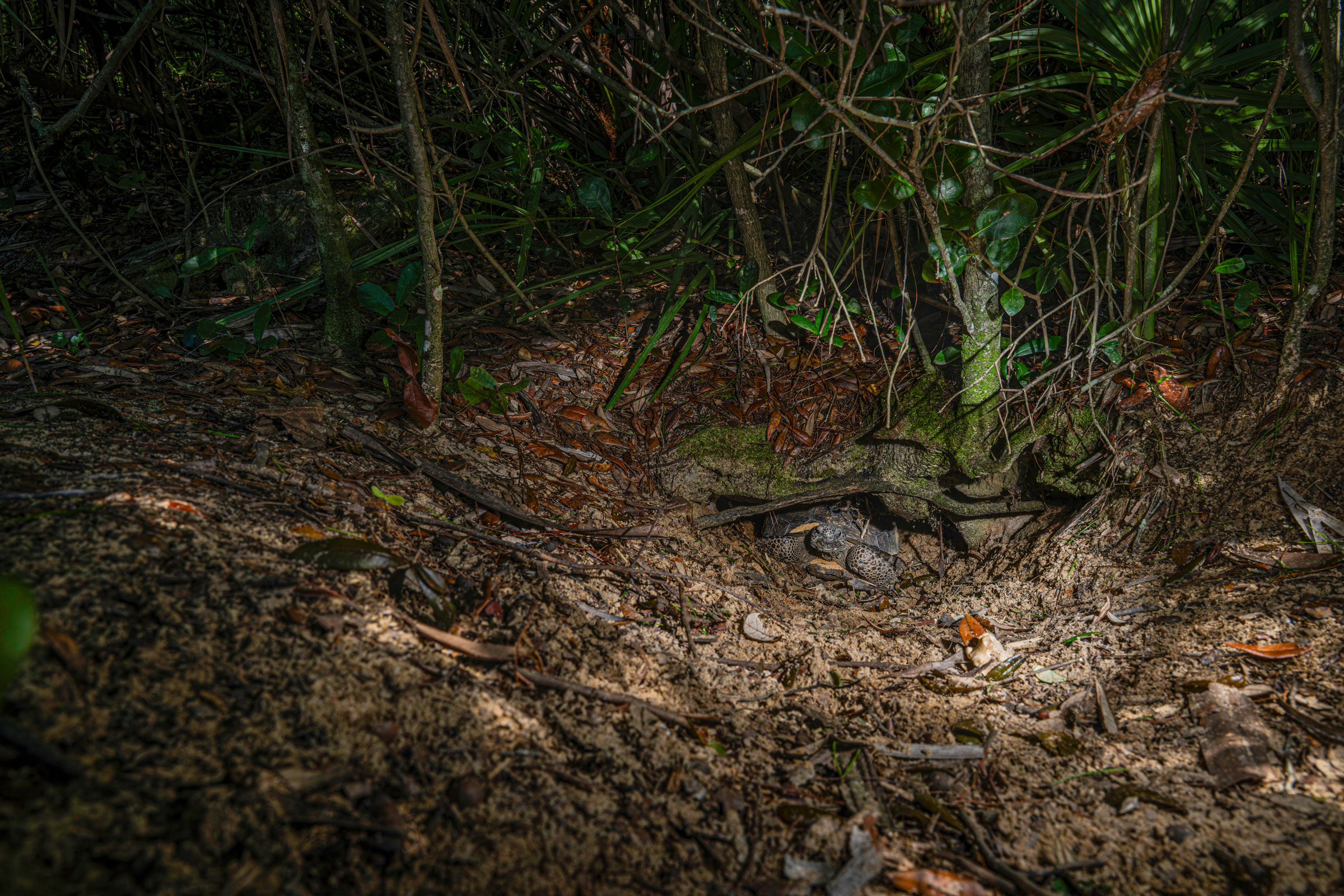
Many tortoises do take to their starter burrows—a promising sign. But others “look almost frantic,” said Aresco. They pace along the edge of the pens, trying to get home, heedless of predators and stubbornly forgoing food and water.
Several years ago, Nokuse biologists discovered dozens of sick or dead tortoises among recently translocated groups on their property. The sick tortoises were emaciated and dehydrated, yet many were still endlessly pacing the fence. Necropsies of the dead tortoises confirmed starvation. The biologists concluded that the stress of translocation, and of being corralled into a foreign area with unfamiliar tortoises, had caused the animals to waste away.
A 2024 study, the first to examine survival rates of tortoises in Florida’s relocation program, confirmed what Aresco’s team suspected: Packing too many tortoises into the initial release pens has a negative impact on survival. After the Nokuse biologists had documented the wasting condition, they made it a policy to spread out their tortoises so that there are no more than three per hectare (1.5 per acre). But at most other recipient sites, tortoises are “stocked” two to four per acre (roughly 5 to 10 per hectare)—a higher density than surveys have found in the wild. Not only does this lead to more aggression between tortoises, it makes it easier for diseases to spread.
“The best way to get a disease outbreak is to put a bunch of stressed individuals at high densities together and expose them to individuals that might be carriers,” says Kevin Loope, a biologist at Virginia Polytechnic Institute and State University who led the study.
Loope acknowledges needing more research to understand the survival rates of translocated tortoises, but scientists have struggled to match the scale and speed at which gopher tortoises are being moved around Florida. Nokuse’s tortoises have been well studied, but what might be happening at other recipient sites which don’t set such a high bar for ensuring the animals’ welfare is largely unknown.
Whether translocated tortoises are surviving in adequate numbers across the state is “something our group is actively interested in,” Loope says, “because right now—to us anyway—the numbers look like gopher tortoises are in big trouble.”
Meanwhile, gopher tortoise relocation has become a booming business in Florida. Much of the state’s remaining gopher tortoise habitat exists on privately owned land, and landowners who are permitted by the FWC to receive tortoises can charge developers whatever they please. Developers desperate to get tortoises off their building sites routinely pay up to $6,000 for each tortoise they relocate.
Pure supply and demand dictates those prices: During Florida’s COVID-19 pandemic population boom, developers made a rush on already-scarce land around the state to build subdivisions, strip malls, and entirely new cities. There were so few sites ready to receive displaced tortoises that landowners gleefully drove up their prices for accommodating the animals. In 2021, a $6,000-per-tortoise fee dropped jaws.
“There is absolutely no way it will stay that high once competition returns to the marketplace,” one recipient site manager told The Palm Beach Post. “I’m charging $2,500, and I see that being more where things land when the dust settles.”
The dust never settled. Today landowners still receive several thousands of dollars per tortoise; depending on how many tortoises they can accommodate, some have received payouts of more than a million dollars.
For landowners like Troy Register, gopher tortoises now represent a powerful financial incentive for preserving land that is dear to them. Register owns small timber and cattle operations in northern Florida’s Suwanee County. He’s permitted to receive tortoises—many rousted from nearby areas where solar farms are being built—on a 56-hectare (140-acre) parcel of his land.
On yet another hot day in the summer of 2025, I drove out to view the area with Register and Susan Carr, now a senior conservation project manager with Florida’s Putnam Land Conservancy, a regional land trust. Register had sold a conservation easement on this parcel to the FWC, which means that he no longer has the right to develop it, and must adhere to standards for protecting gopher tortoises. He was in the process of selling another conservation easement, on another piece of land, to the Alachua Conservation Trust, which Carr represented at the time.
A faint smell of smoke lingered in the air as we rode to the site. A week before, Register had burned several hectares of sandhill, an ecosystem once characteristic of this part of northern Florida but now increasingly rare. Fire is necessary to maintain habitats like sandhill and longleaf pine savanna. For Register, whose children represent the fifth generation of his family to live on this land, these habitats are his heritage.
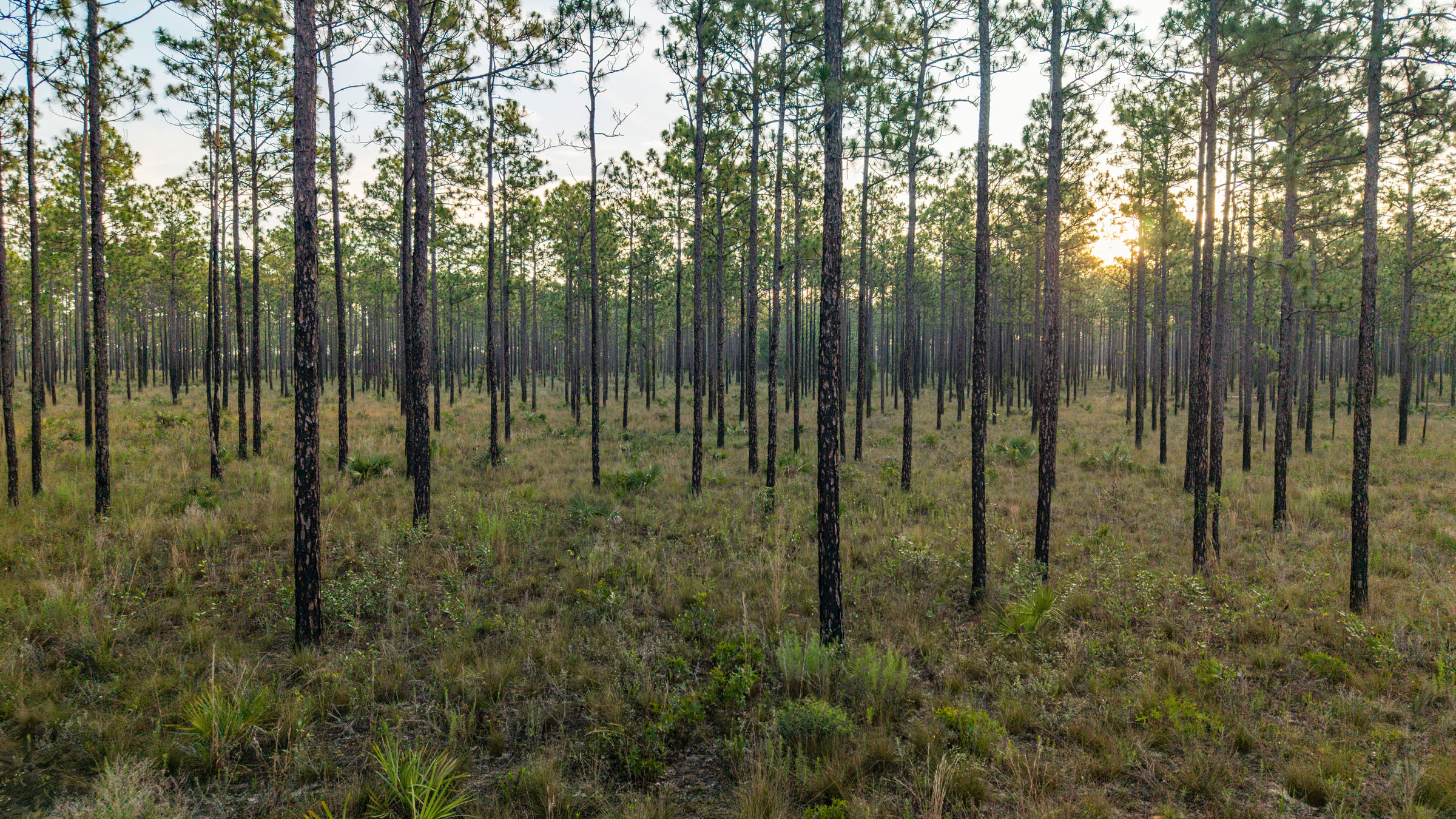
Register stopped the vehicle and we gazed out at the burnt landscape, where the lush emerald pines, unfazed by fire, contrasted prettily with the sienna-colored oaks and shrubs. Pale green tufts of wire grass, for which fire is like water, were already beginning to sprout again.
“I wanted the conservation easement because of this,” Register said, pointing to a thicket of wire grass. Growing up, he was used to seeing wire grass stretching to the horizon. It makes especially good habitat for game birds like quail. Now, he said, “no one has it anymore.” He spoke regretfully of seeing thousands of surrounding hectares of wire grass disappear “overnight” under row crops.
For Register and other landowners, the income from gopher tortoises and conservation easements—which typically go hand in hand—have allowed them to keep these natural lands intact, instead of converting them to agriculture or selling to developers to stay profitable.
Back at Register’s ranch house, the conversation turned to people Carr refers to as gopher tortoise farmers. Receiving tortoises has become so lucrative that some investors are buying land for that purpose—particularly if they catch wind of plans for major solar, mining, housing, or roadbuilding projects that would displace tortoises. One nonprofit organization even raised eyebrows by courting public donations to purchase gopher tortoise habitat, with critics calling it little more than a moneymaking scheme.
An investor had recently approached the land trust Carr worked for with a proposal that Carr—who has a certain snap to her words—described as “buy it, fill it, flip it.” The idea, which was discussed but never carried out, was that the investor would buy land, restore it into tortoise habitat, secure the permits, and “fill” the site with gopher tortoises. Afterward, the investor suggested, the property could be sold, or transferred to Alachua or another land trust to become a protected preserve.
“And then they can walk away with their pockets full,” Register put in.
“That’s right,” Carr responded.
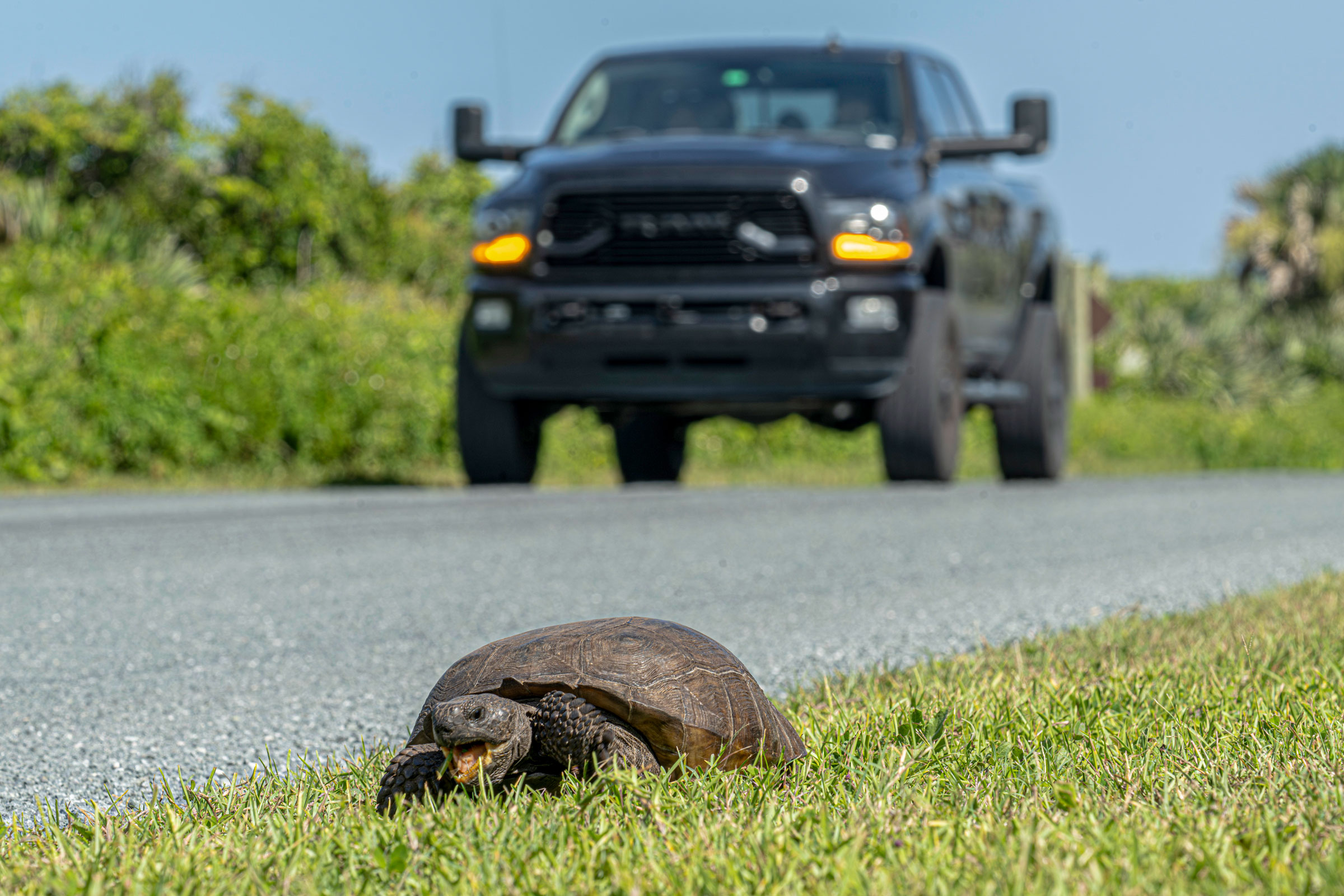
Still, the proposal would result in conservation land that would be permanently protected from development and managed for gopher tortoises. Whatever the motivations of its participants—to protect land, to protect gopher tortoises, to protect land and gopher tortoises and make money—the relocation program has resulted in more land being placed under long-term conservation easements.
In a state as teeming with development as Florida, many conservationists welcome the relocation program as an incentive for preserving land—and, as Loope notes, moving gopher tortoises is certainly better than paving over them. But Carr echoed the uncomfortable feelings of many biologists when she doubted aloud whether the program would ultimately prove successful in slowing the long decline of the species.
Given the early evidence that relocation may be whittling away the tortoise populations it’s intended to save, many biologists argue that it’s unwise to rely on it as the primary mechanism for gopher tortoise conservation.
In 2013, Aresco was part of a working group that determined that for a gopher tortoise population to sustain itself, there needs to be a minimum of 250 adults on a minimum of 100 hectares (247 acres) of high-quality habitat. Too many tortoises on a piece of land is detrimental, but having too few can leave them more vulnerable to extirpation. Any random event—a disease, a storm, a developer plopping down a strip mall—could spell disaster for a tortoise population that is either too thinly spread or too overcrowded.
Aresco argues that wherever these minimum viable populations are still found in Florida, they should be left. Slicing and dicing tortoise populations into ever-smaller groups, on ever-smaller land fragments, puts the entire species at risk.
The working group’s findings were meant to inform the U.S. Fish and Wildlife Service (USFWS), which at that time was considering listing the gopher tortoise under the federal Endangered Species Act. But in 2022, the agency announced its decision to deny the tortoises federal protection. The decision crushed Aresco and other tortoise advocates, who consider federal listing a necessary mechanism for protecting minimum viable populations.
Shortly after the that denial, however, Loope and his colleagues discovered serious errors in the population model the USFWS had used to predict tortoise numbers into the future. The mistake led to dramatically inflated projections, which had then served as the basis for the listing decision. Fixing that error, Loope says, would instead cause the model to predict extinction.
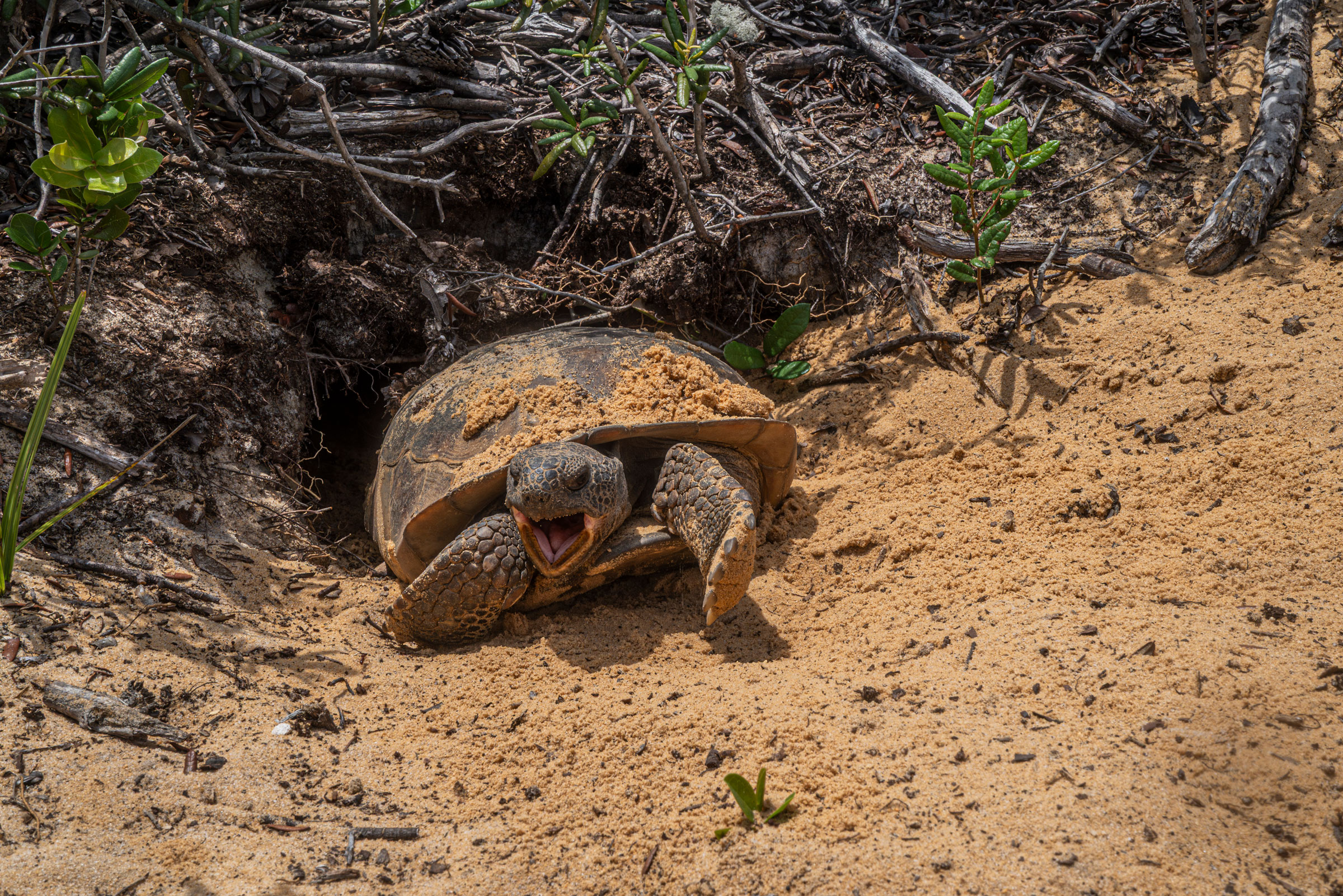
He and his colleagues asked the USFWS to retract their model, but the agency, which is currently being sued by the Center for Biological Diversity and the Nokuse preserve for its decision not to list the gopher tortoise, issued a noncommittal response, according to Loope.
In the meantime, the FWC anticipates the continued decline of gopher tortoise populations throughout the state. Its recently revised plan for the species is aimed at “minimizing the loss” of gopher tortoises and protecting viable populations. But without the power to simply halt development on private lands where those populations occur, the agency’s hands are tied. And what happens to Florida’s tortoises could spell triumph or disaster for the entire species.
“Florida is the stronghold for the species,” says Loope. “[But] the development is just staggering. The rate at which habitat is being lost is staggering.”
Allowing some gopher tortoises to safely remain where they are—where they’ve been for millions of years—is unlikely without federal protection, which is still possible if the federal government’s listing decision is overturned by the lawsuit. And as the process slowly works its way through the court system, Florida’s gopher tortoises continue to be moved like so many chess pieces. Instead of bulldozers coming for them now, it’s backhoes. Instead of certain death, uncertain survival.
“We can’t move 10,000 tortoises a year indefinitely,” Loope says, “because there aren’t going to be any more [on private land] to move in a while. So we need to figure it out.”
Hi, I’m Dave, the executive director of bioGraphic. (And that’s my dog, Finn.) Thanks for taking the time to read this story.
Stories like this simply don’t get produced without financial support from readers like you. bioGraphic is an independent non-profit—we’re not backed by a private company or owned by a billionaire. One-quarter of our budget comes directly from reader donations.
bioGraphic publishes environmental reporting that you can’t find anywhere else: deeply researched, trustworthy stories that are also beautiful and captivating to read. Right now, we need your help to raise $20,000 by October 2. Every dollar will go directly to more crucial reporting projects.
Around the world, governments are slashing funding for conservation and scientific research, placing even more ecosystems and wildlife at risk. At bioGraphic, we’re steadfastly shining a light on the threats to our planet’s incredible biodiversity. And we’re showcasing the hard work of people bravely taking action to protect at-risk species.
bioGraphic offers an antidote to apathy and doom-and-gloom news by revealing the wonders of the natural world and focusing on real solutions to big problems. When you finish a bioGraphic story, we want to leave you feeling informed, delighted, and inspired.
We don’t run ads or hide our stories behind a paywall. The readers who generously support bioGraphic allow our work to remain free for everyone.
Will you help us raise $20,000 by October 2?

Related Articles
Death by a Thousand Dams
Tens of thousands of small barriers hamper fish recovery in the northeastern United States. But while the demolition of big dams out west gets the most attention, a similar revolution is revitalizing northeastern streams and rivers—one tiny dam at a time.
The Unwilding of Patagonia’s Pollinators
In a region synonymous with wilderness, native bumblebees are being replaced by industrial worker bees—and ecosystems are paying the price.
The Corals That Shouldn’t Exist
Beneath Miami’s skyscrapers, a colony of corals defies expectations—and offers insight into other undersea urban ecosystems.
