
This story is part of our Wildlife at the Crossroads series, which explores the intersection between human infrastructure and wildlife—and what can be done about the resulting impacts. It was funded in part by The Bernard Osher Foundation. Find all of the stories in the series here: Wildlife at the Crossroads.
To be a large mammal in the western United States is to wander. Water is scarce, food scattered, summers brief, and snows deep. Survival often requires migrating between ephemeral habitats, an act that unwittingly leads animals through a bewildering panoply of jurisdictions. An elk roaming the Greater Yellowstone Ecosystem—the vast swath of relatively wild lands at the nexus of Wyoming, Montana, and Idaho—might pass through the realm of the National Park Service, the United States Forest Service (USFS), the Bureau of Land Management, or other federal agencies, as well as acreage owned by two or three states.
Yet there’s another category of land management that often gets overlooked: local governments, which collectively administer over two-thirds of the United States’ surface area. County and municipal governments oversee not just an immense quantity of land, but, from an animal’s standpoint, lands of top-notch quality. While federal agencies like the USFS manage the undeveloped mountaintops, it’s local governments that hold sway over townsites and ranches, which tend to lie in fertile valleys close to water. “Everywhere that humans want to live is, in fact, where wildlife wants to live,” Kylie Paul, a road ecologist at the Center for Large Landscape Conservation, a Montana-based group that promotes habitat connectivity worldwide, told me.
Historically, it’s fair to say that few local governments have been at the forefront of conservation, in no small part because bureaucrats are generally loath to tell landowners what they can do with their piece of earth. The result of that laissez-faire approach has been runaway development—first in the eastern U.S., where less than 2 percent of natural areas are sufficiently connected for animals to move freely between them, and more recently in the western states, where swaths of ranchland are being rapidly chopped up into subdivisions chockablock with condos and townhouses. According to one 2016 report, a football field of western habitat succumbs to development every minute, with losses most catastrophic to migratory creatures like mule deer and pronghorn.
“We’re losing about 10 acres a day to development,” said Cindy Riegel, a former Teton County, Idaho, commissioner, of the Greater Yellowstone. “Every time I see a piece of sagebrush plowed over in my community, my stomach turns.”
Against that tide, however, pushes another: Across the West, a handful of farsighted local governments have begun preserving and connecting habitats within their jurisdictions. They’ve accomplished this through unsexy regulatory tools such as zoning, land-use codes, and comprehensive plans—the abstruse levers of governance that attract single-digit crowds when they’re discussed in public meetings. Yet nothing could be more vital to wildlife than these superficially boring instruments, which dictate the answers to conservation’s most important question: What, and who, goes where?
Photograph by Kris Wiktor/Shutterstock
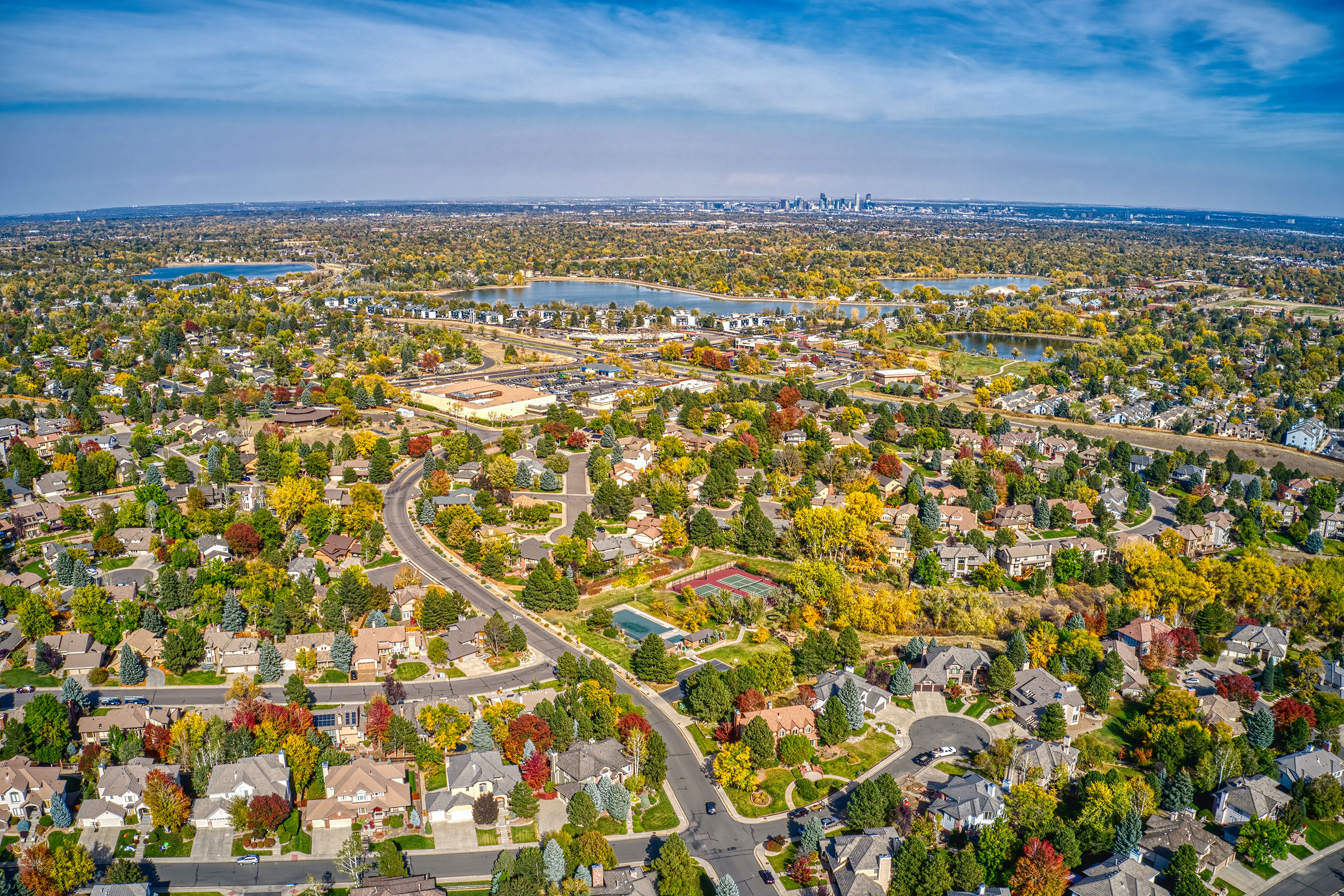
I live in Chaffee County, Colorado, a fast-changing locale whose residents and officials have lately been navigating this very question. Like many western communities, Chaffee—which occupies a paradisical valley where the Sawatch and Sangre de Cristo Mountains rub shoulders—has spent the last 20-odd years transitioning from an agricultural economy to a recreational one predicated on biking, fishing, rafting, and other modes of messing around in the outdoors. As Chaffee’s reputation and population have grown—today it’s the year-round home of over 20,000 souls, roughly one-fifth more than lived here two decades ago—so have its property values. Immense ranches have been supplanted by suburban-style McMansions serviced by spiderwebs of roads, spelling trouble for the herds of mule deer, elk, and pronghorn that, having spent summers scattered across central Colorado, descend on our warm, bountiful valley each fall and winter. Migration corridors have become subdivisions, and a quarter of the county’s car crashes are now animal collisions—a rate far higher than the state’s average.
Against that thorny backdrop, Chaffee has spent a decade trying to reconcile development with conservation. Beginning in the mid-2010s, the county began crafting its comprehensive plan, an overarching vision of its goals and priorities, and mapping wildlife habitats in consultation with biologists. Guided by those documents, in 2021 county staff and commissioners set out to revise its land-use code, the dense compendium of laws that governs what, where, and how landowners can build on private property. None of this seems inherently riveting—but considering that the code would dictate the fate of some 40,000 hectares (almost 100,000 acres) of county land, it couldn’t be more crucial.
Miles Cottom, the county’s planning director, told me that the code was guided by a succinct mantra: “Keep the town town and the country country.” In other words, encourage new housing construction close to Chaffee’s population centers—the municipalities of Buena Vista and Salida—while restricting it in the far-flung swaths of unincorporated rabbitbrush where the deer and the antelope play.
Previously, a developer building a subdivision on a former ranch anywhere in the county would have been permitted to carve it up into a series of 2-acre (0.8- hectare) lots, creating cookie-cutter neighborhoods with little space for wildlife. The revised code, however, allows developers to squeeze as many as 16 lots per acre (nearly half a hectare) into a property near town—picture a tight knot of townhouses or condos. By contrast, remote areas deemed high-quality habitat can only have one unit for every 35 acres (14 hectares)—picture a lonely A-frame on a ridgeline.
The new code also incentivizes “cluster development,” which lets developers cram more homes into one corner of a parcel if they permanently protect the rest. Other provisions require builders to stay at least 300 feet (91 meters) away from streams and wetlands and to outfit new roads with animal underpasses and other wildlife-friendly design features such as speed bumps.
The goal, Cottom said, was to shepherd new housing away from the county’s large, still-intact landscapes—not to quash construction altogether. “It’s no longer just, ‘How many lots can I fit in a square?’ It is, ‘How do I design this [development] to best meet the community’s goals?’”—a community that includes trout, beavers, eagles, and elk, as well as humans.
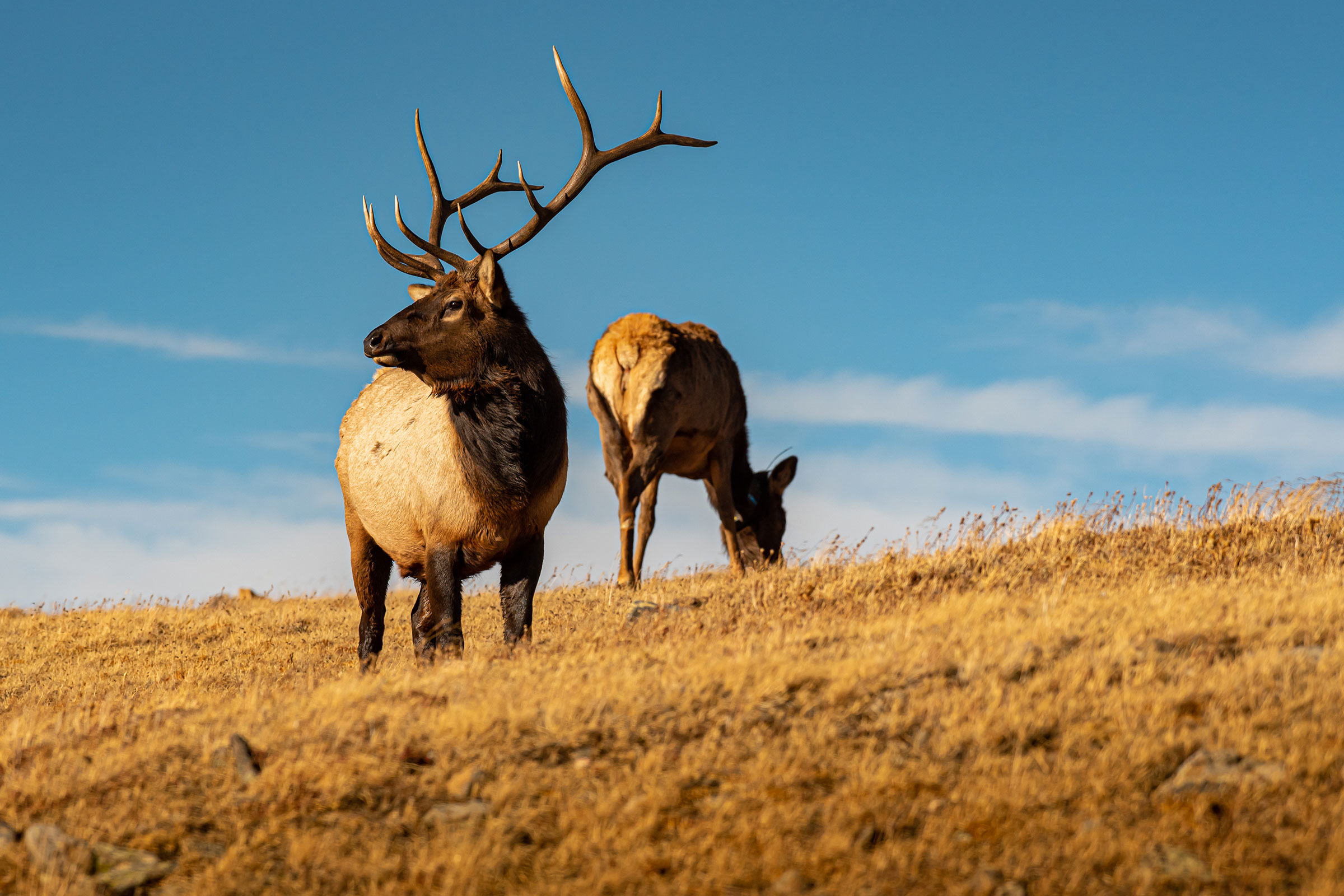
Such foresight is still the exception. Most towns and counties, said the Center for Large Landscape Conservation’s Paul, are stuck protecting “the little scraps that are left,” rather than proactively safeguarding intact corridors. In a recent report, though, she surfaced some examples of communities doing it right, or trying to. Development regulations in Wyoming’s Teton County require landowners to build far away from trumpeter swan and eagle nests, install wildlife-friendly fences, and avoid fragmenting the migration corridors of deer, elk, and moose, among other conservation-minded restrictions. The rapidly exploding Arizona cities of Buckeye and Surprise are mapping the wildlife corridors in their midst, and Eagle Mountain, Utah, is attempting to protect the entire migration route of its local deer.
Here in Colorado, a conservation-minded planner might draw inspiration from Douglas County, an expanse of prairie, scrubland, and pine forest nestled between Denver and Colorado Springs. In 1994, Douglas voters elected to hike sales taxes to buy and protect land, hardly typical for a conservative county. “We just saw things being eaten up in development like crazy,” recalled Andy Hough, the county’s environmental resources coordinator. In the decades since, planners have leveraged those funds to conserve a network of core habitats and corridors comprising more than 26,000 hectares (65,000 acres), and worked closely with the state to install a half-dozen wildlife crossings on the highways that run between those protected areas—including a 61-meter (200-foot) wide overpass, one of the world’s largest, that opened to four-legged pedestrians in December 2025.
Though not nearly as attention-grabbing as an overpass, Douglas County’s finest stroke might be its Comprehensive Master Plan, which divides land into various tiers of habitat with corresponding development rules. A would-be builder who wants to put a subdivision into top-tier habitat, for instance, generally has to maintain an undeveloped strip at least 1,000 feet wide, roughly 300 meters, often with accompanying berms and plantings to screen wild animals from the people and dogs who might disturb them, among many other conservation-minded provisions. Today 90 percent of Douglas County’s population of nearly 400,000 people lives in just 20 percent of its land area, leaving plenty of space for species such as pronghorn, elk, and bighorn sheep. “I think we have built a system that will sustain our flocks and herds in perpetuity,” Hough said.
Photograph by Patrick Poendl/Shutterstock
Like Douglas County, one of the country’s fastest-growing exurbs, other swaths of the once-rural West are transforming at breakneck pace. If current trends persist in the Greater Yellowstone Ecosystem, once-sleepy towns in Montana and Idaho could someday erupt into population centers as large as Minneapolis and Salt Lake City. All that growth strains resources, pointed out Riegel of Teton County: Cash-strapped counties must shell out to maintain dirt roads battered by exploding traffic, new wells deplete finite groundwater, and sprawl pushes neighborhoods into fire-prone forests. “There is a true economic cost” to communities that “don’t develop in a planned and organized fashion,” said Riegel, who in 2025 founded an initiative called Project Greater Yellowstone to promote sound planning across a region roughly the size of Portugal. Limiting sprawl doesn’t just aid wildlife—it allows rural towns and counties to survive inevitable growth.
In California, wildlife-friendly planning might likewise align with other societal goals. In 2024, the state passed the Room to Roam Act, which requires local governments to use the “best available science” to protect and connect habitats. According to Neal Sharma, California Wildlife Program director at the Wildlife Conservation Network, a municipality trying to comply with the new law might have to synthesize data such as the tracks of satellite-collared animals and sophisticated “landscape resistance” computer models—not exactly familiar terrain for planners unversed in wildlife biology. “There’s a bit of overwhelm,” Sharma acknowledged. Yet some officials and advocates also view the law as an inducement to build denser housing in town centers far from intact habitat, a longstanding urbanist dream, and so align affordability in cities with conservation beyond them. To Sharma, this demonstrates “really strong overlap” between environmentalists and housing advocates.
Restricting development for wildlife’s sake amidst a national housing shortage is not, granted, universally popular. Under the Trump Administration, the U.S. Department of the Interior has even floated the idea of slapping thousands of houses onto public lands. In the rural West, though, unchecked home construction atop open space doesn’t alleviate housing costs so much as it enriches Airbnb investment companies and gives the ultrawealthy another place to vacation. Likewise, while building more affordable housing within city limits is an indisputably worthy goal, it won’t stop developers from trying to turn elk range into condos here in Chaffee County and beyond. Only regulation—all those unglamorous codes and plans and overlay zones—can do that.
“We’re not looking to just continue to grow at all costs, but to really create communities and environments where people and wildlife and ecosystems can thrive long term,” Cottom said. “What we’re striving for is to create something that can last.”
Photograph by Chris Finch Photography/Shutterstock
Related Articles

How Much Plastic Does it Take to Kill a Seabird?
For the first time, researchers uncover how eating plastic trash may impact seabirds at the population level.

Shrimp Shell Slurry to the Rescue?
A new, multistep chemical process can turn bits of organic waste into “carbon-negative” fuel, food, and construction material.
The Lonely Race to Save Ukraine’s Past
In a country ravaged by war, Ukraine’s conservators are torn between protecting the country’s past and fighting for its future.
