
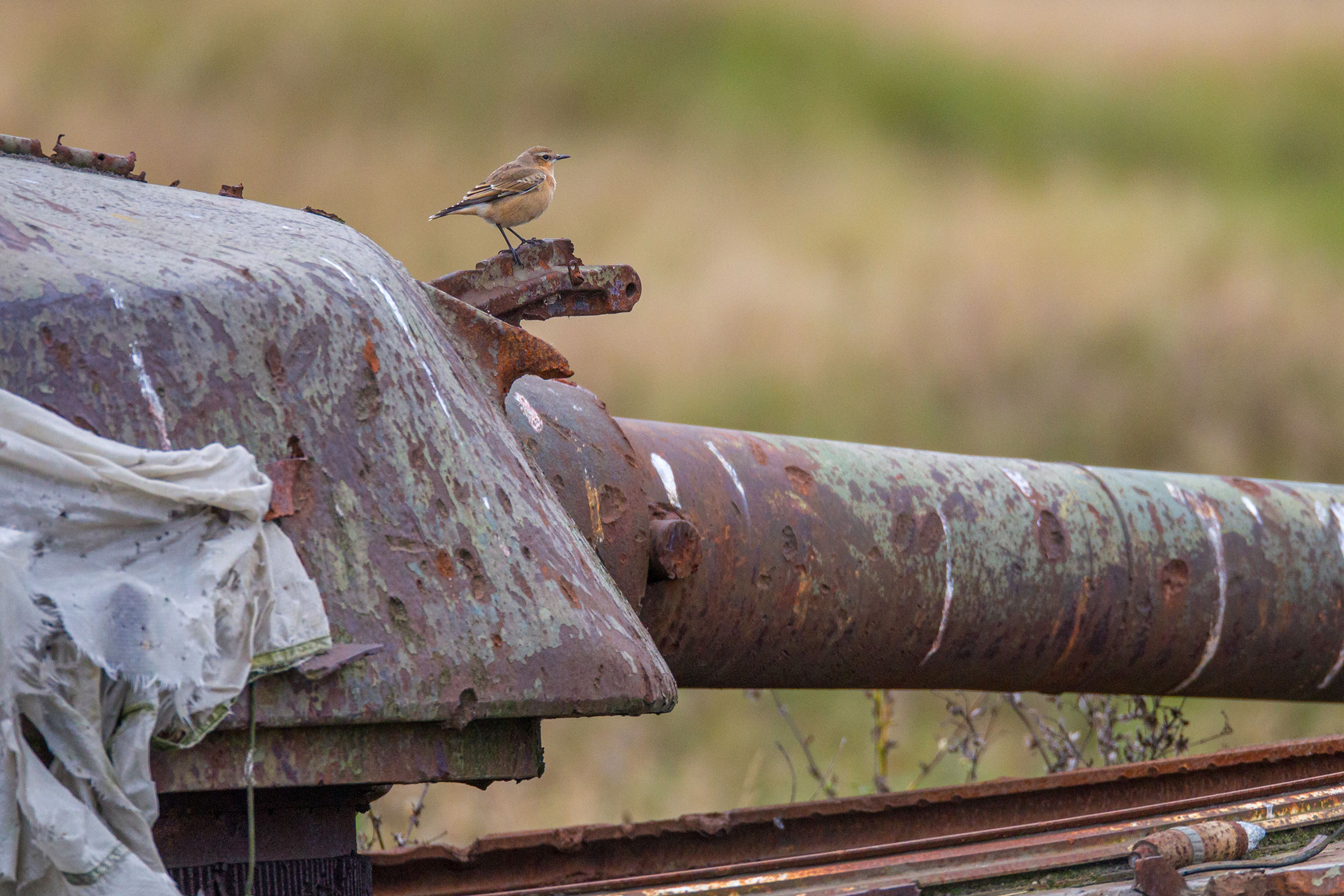
Photographs by Juergen Borris
An ice-slicked road bisecting open grassland in southern Germany exposes a paradox. On one side of the road, a herd of nearly three dozen red deer (Cervus elaphus) graze, their heads bowed as they munch the grass poking through snow. On the other side, a group of camouflaged artillery tanks, low like bulldogs and equipped with cannons, take aim and fire at practice targets. Several deer look up. Most continue grazing.
“[The deer] know the military training, and they are absolutely not afraid of it,” says Andreas Irle, a forester with Germany’s forestry department, as we sit in an idling truck on the road during a wintry day in January 2026.
For the past four decades, Irle has managed this 23,000-plus hectare (57,000 acre) area in the state of Bavaria. Known as the Grafenwöhr Training Area, it’s a United States Army base where U.S., German, and other NATO and allied forces—most recently Ukrainian—have trained for war in the past century. Here, service members practice driving tanks, launching rockets that explode above the pines, and firing at targets from low-flying jets and helicopters.
Also here live cloistered populations of rare bats, birds, insects, plants, and even wolves. Grafenwöhr is a biodiversity hotspot, and not an unusual one. Around the world, military training areas and biodiversity tend to overlap. In Germany, two-thirds of all military training areas—almost 135,000 hectares (over 333,000 acres), which is one and a half times the size of Berlin—are protected under German national law as part of Natura 2000, a European Union initiative that safeguards a network of land and marine natural areas across all 27 member states.
Even without Natura 2000 protection, military bases and training areas are often de-facto nature preserves: They’re sprawling swaths of mostly undeveloped land with restricted public access. Disturbances caused by training—including wildfires from artillery and soil disturbances from vehicles—can also mimic natural processes that are otherwise often missing from modern landscapes.
But a major change is underway in Germany. For the first time since World War II, the country is embracing national defense. To strengthen Europe’s preparedness against a growing threat of war with Russia—and amid an increasingly unreliable partnership with the U.S.—German Minister of Defense Boris Pistorius has promised to double the size of the Bundeswehr—the German armed forces— by 2035, adding some 200,000 personnel and reservists and bringing war training back to some long-abandoned military lands.
Now, as soldiers reinhabit and expand these landscapes to prepare for war, biologists are tracking what the changes will mean for the flora and fauna who are living alongside exploding artillery and tank-hardened roads.
Grafenwöhr is one of the oldest continuously operated training areas in Germany—a place where the tension between destruction and growth on a militarized landscape is often apparent. Together with a smaller training area around 60 kilometers (37 miles) to the southwest, the base makes up less than 1 percent of Bavaria’s landmass but is home to more than 20 percent of the state’s threatened or endangered species.
A training ground was first established here in 1910, and Grafenwöhr operated as a prisoner of war camp during World War I. Under the Third Reich, it reverted back to a training facility and doubled to its current size. U.S. troops took over the facility after World War II. Today it serves as the United States’ largest and most advanced live-fire training facility in Europe. Upward of 16,000 U.S. soldiers are stationed at Grafenwöhr at a given time, and hundreds more German soldiers train here for 12 weeks per year. To accommodate more German troops, the German military is currently expanding its permanent outpost on Grafenwöhr.
Yet as Irle and I cruise farther along an 88.5-kilometer (55-mile) ring road circling the perimeter of the most highly used areas of Grafenwöhr, the sound of training is muted by trees. Instead, the hush of early winter belies the purpose of this place. Irle hops out of the truck and walks briskly along the snowy road, pointing out fresh animal tracks. Hare. Fox. Wild boar. More than 3,000 plant and animal species live throughout Grafenwöhr’s various microclimates of forests, lakes, wetlands, fields, and open sand dunes, he says, and about a third are threatened or endangered. One is the white-tailed eagle (Haliaeetus albicilla), the national bird. It perched on the edge of extinction for a century before new regulations on toxicants in the 1970s enabled it to recover. In the early 2000s, one was found nesting in a tree in Grafenwöhr.
Many of these animals thrive not in spite of the military training area but because of it. On the left arm of Irle’s green forestry jacket, four acorns stitched into a patch signifying his rank are a testament to his four decades-long relationship to the land and its inhabitants. For nearly a decade, Irle has also served as liaison between the U.S. military and Germany’s forestry department, which comanage the land. His job is to align training activities with ecosystems in Grafenwöhr that benefit from disturbances and to mitigate interference in areas with sensitive habitat.
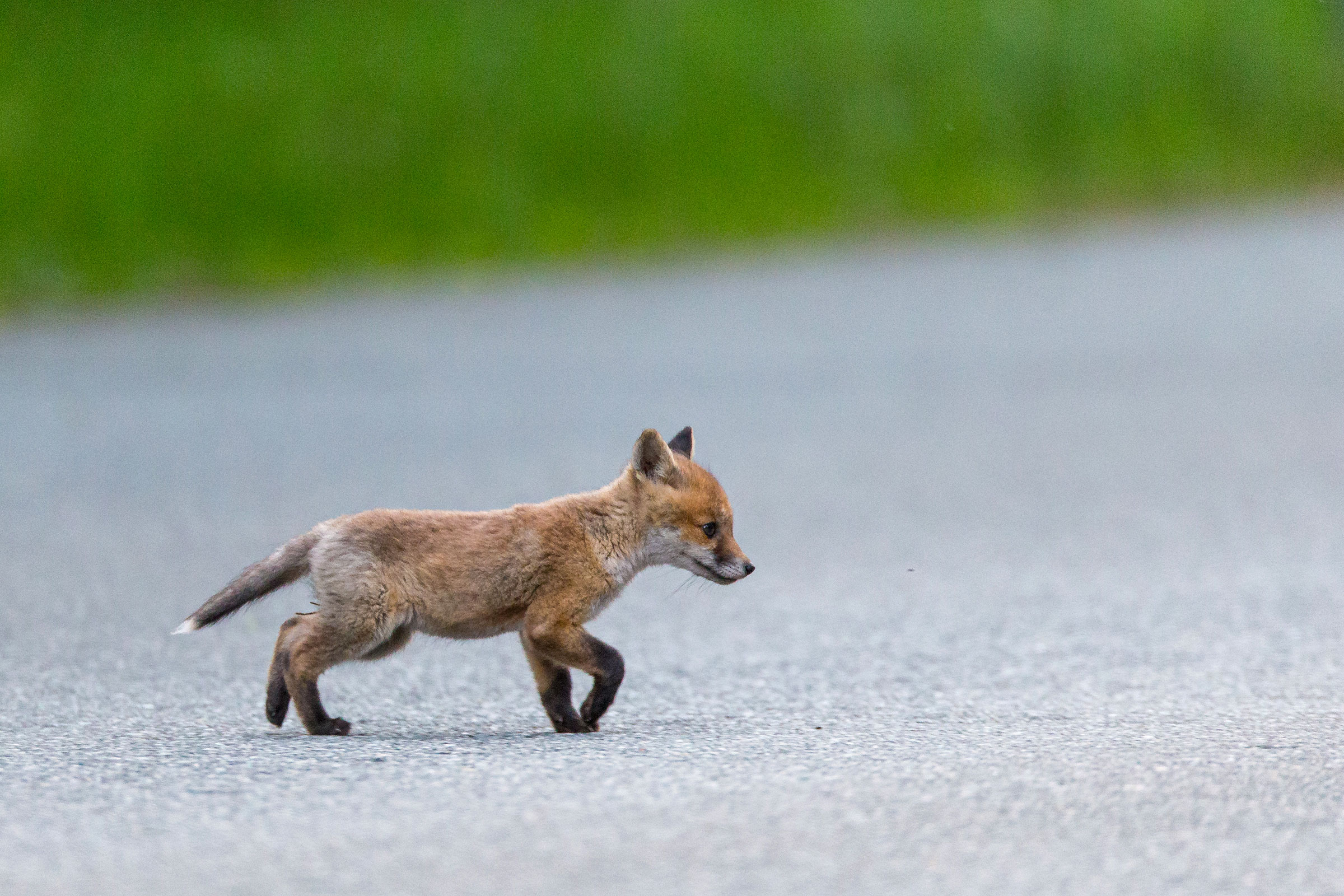
Along the ring road, some of Irle’s work is visible. Capital-letter signs warn personnel that certain paths are OFF LIMITS TO ALL MILITARY VEHICLES. Down those roads, dormant orchids are blanketed by snow, and wintering lily pads are frozen within a roadside pond’s surface. Irle says that, come springtime, his team will relocate target-shooting practice from one range to another, away from where resident ospreys nest.
Other species that consider Grafenwöhr home, like the yellow-bellied toad (Bombina variegata), benefit from some military disturbance, says Stefan Härtl, an environmental engineer with the U.S. Army Garrison Bavaria on the Grafenwöhr Training Area, whom I chat with later. “An artillery shell that explodes on the ground creates a vegetation-free crater,” Härtl says, comparing the crater to the natural depressions created when a river or stream switches course. The crater accumulates water, and spawning amphibians follow. In cultivated landscapes, however, infrastructure rarely allows a waterway to wander.
Fires sparked by artillery practice also contribute to biodiversity by removing invasive species, Härtl tells me. As a result, a tiny rare plant called coral necklace (Illecebrum verticillatum) grows at Grafenwöhr. On a bigger scale, the fires help create a mosaic of habitats that allows for a greater number of species to thrive, Härtl adds.
After identifying the animal tracks, Irle and I climb into his truck and continue along the ring road. He narrates the patchwork of habitats we pass. There’s bare ground, sparse shrubland, and wooded bog. There are also 80-year-old stands of pine, fir, and oak—trees that took root just as people and ecosystems were recovering from the destruction wrought by World War II.
Grafenwöhr wasn’t always the oasis it is today. By the late 1980s, after decades of heavy use during the Cold War, Grafenwöhr’s grasslands looked more like deserts. A muddy, eroded training area made military activities more difficult. Tanks got stuck. Repairs took time away from training. Grafenwöhr’s destruction sparked the creation of an environmental division within the U.S. military to better care for its borrowed landscape, Irle says. Later, Natura 2000 laws further strengthened environmental protections—though such laws could be bypassed if they come up against pressing national security.
Today, many German biologists and ecologists agree that regular military disturbances increase the country’s biodiversity. But there is no consensus on what the upper limit of that disturbance is.
“Regular disturbance is key to maintaining biodiversity,” says wildlife biologist Marcus Meißner, who spent 15 years studying the red deer population’s effect on plant biodiversity in Grafenwöhr. Without regular and uniform disturbances, dominant species would take over and forests would quickly multiply.
“Continuous use over the whole area is what’s most important,” says Meißner. For the red deer population, at least, the number of soldiers doesn’t matter. “It’s just a question of the way [the soldiers are] using the area.”
From a practical perspective, though, more soldiers could make environmental protection harder. This was evident after Russia’s attack on Ukraine in February 2022, after which an influx of Ukrainian troops came to Grafenwöhr to train. “[That] had a large influence on our work as researchers,” says Friederike Riesch, an ecologist at Germany’s University of Göttingen who studied the grazing behavior of red deer at Grafenwöhr from 2019 to 2022. “Our work became much more difficult because there was more training going on, so it was difficult to access areas where we’d usually go,” Riesch says. “There were more shooting times, and less down times. There was much more going on.”
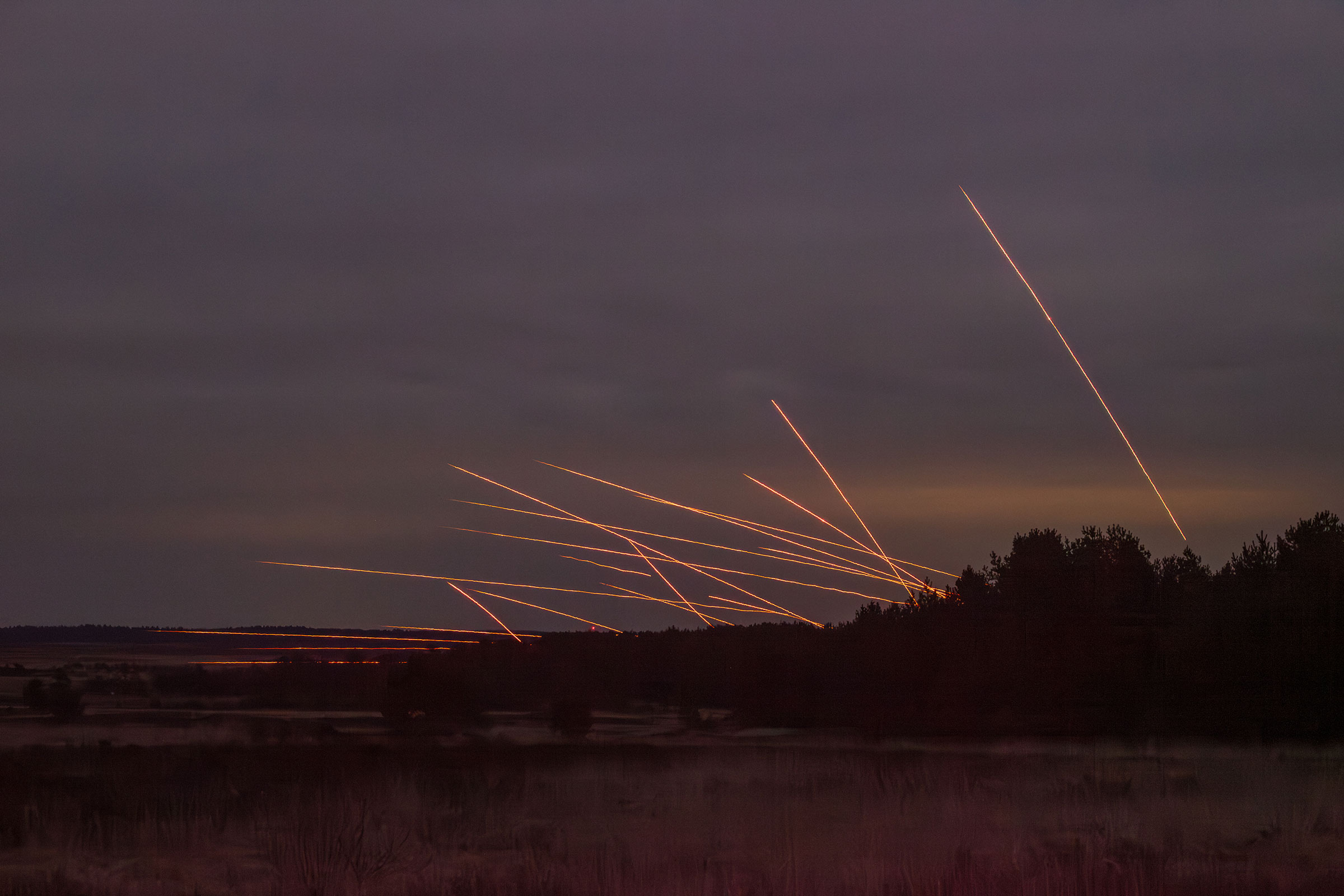
Looking ahead, Härtl says he doesn’t anticipate the amount of disturbance on military areas in Germany to rival that of Cold War levels, when Grafenwöhr became so degraded. “We could face some periods with heavier training and more disturbance, but biodiversity may even profit from that,” he says.
Others, like Riesch, see the past mismanagement of Grafenwöhr as a harbinger of what’s possible with increased military presence. “Maybe the heads of the military have learned from the past, that there has to be some structured way in planning their activities to prevent such soil degradation,” she says, adding that destroying an area doesn’t benefit military activity either.
Additional European countries—including Denmark, the Netherlands, and Belgium—have also designated about half or more of their training grounds as Natura 2000 sites. But they’re significantly growing their militaries in light of decreasing global stability too, as are other EU member states. Germany, with the largest economy in the EU, is a leading example of Europe’s priorities, says Portuguese researcher and biologist Ronaldo Sousa.
In late 2025, the German parliament approved an unprecedented defense budget of €108.2 billion, or about US $124 billion. “The most pressing concern is the financial trade-off, as increased military expenditures could reduce funding for conservation programs, monitoring, research, and protected area management,” Sousa and his coauthors wrote in a recent academic paper. In other words, Sousa makes the case that increased military expenditures across the EU poses a significant threat to biodiversity conservation.
At the moment, as my tour of Grafenwöhr continues, it’s hard to tell whether we’re in a military base or a nature preserve. Irle slows his vehicle alongside a silent, frozen lake ringed by snow-laden pines. “This is nature at its finest,” the forester says, squinting into the sun. He and his colleagues have an incentive to keep it that way. Caring for the land helps the military maintain the quality of training exercises, he explains. Healthy forests and varied landscapes make it easier for troops to practice stealth tactics, and being able to access varied types of terrain mimics the conditions that soldiers might encounter in actual war.
Still, even this peaceful winter scene isn’t immune to Europe’s growing war machine. A trio of swans—two parents and their offspring—huddle together at the edge of the lake, their bills tucked into their feathers to keep warm. At the muffled sound of gunfire from training troops a few kilometers away, one of the swans raises its head toward the horizon.
Reporting for this article was partially sponsored by a grant from ComLab, an exchange between journalists and scientists hosted by the International Journalists’ Programme and the Alexander von Humboldt Foundation in Berlin, Germany.
Related Articles
The Unwilding of Patagonia’s Pollinators
In a region synonymous with wilderness, native bumblebees are being replaced by industrial worker bees—and ecosystems are paying the price.

The Corals That Shouldn’t Exist
Beneath Miami’s skyscrapers, a colony of corals defies expectations—and offers insight into other undersea urban ecosystems.
The Return of the Kite
In the 1990s, red kites were reintroduced to England from Spain. Now, the English are returning the favor.
